SIX OF US #1 (Dark horse comics)
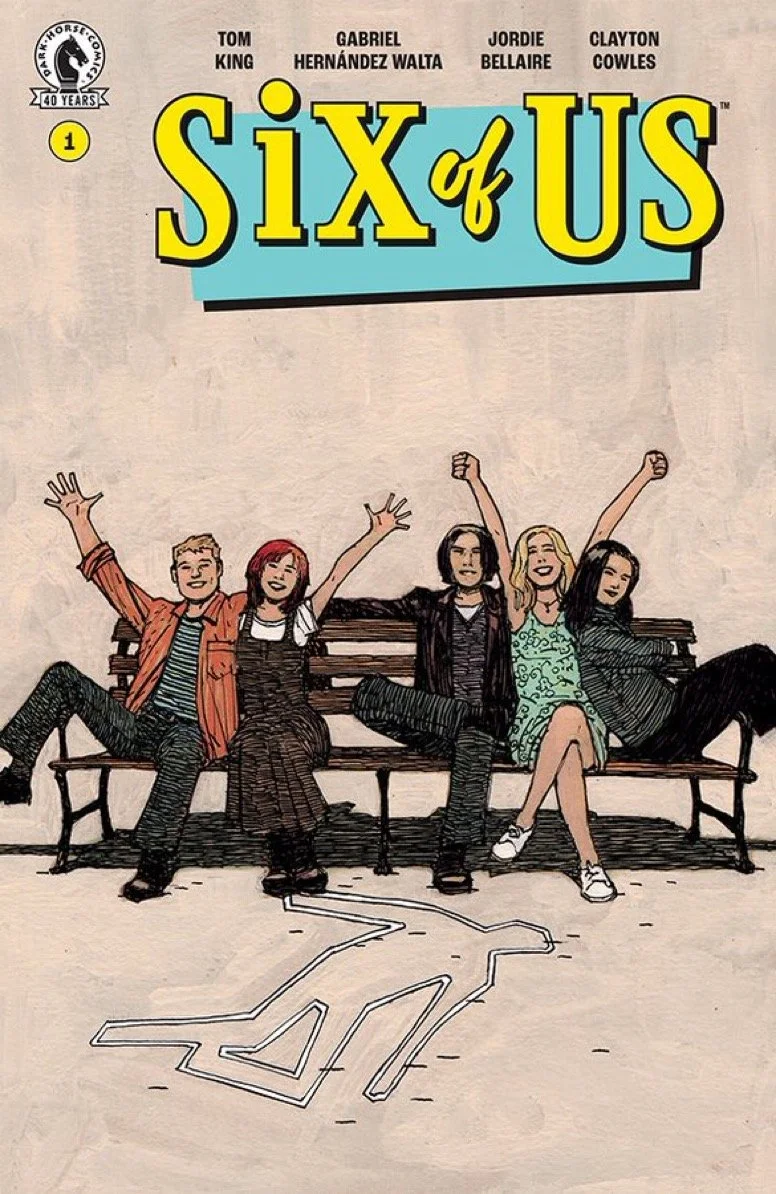
A famous comedy sitcom about friends in Chicago is back in the news, not for a reunion, but rather a funeral. What happens when someone stops being nice and starts being a killer? You get Six of Us from Dark Horse Comics, the perfect marriage between Friends and a true crime thriller. So, I guess no one told you life (or death) was gonna be this way.
Six of Us #1 - Written By Tom King – Art By Gabriel Hernández Walta – Colors By Jordie Bellaire – Letters By Clayton Cowles – Edited By Daniel Chabon - Published By Dark Horse Comics
Credit: Dark Horse Comics
*** POSSIBLE SPOILER WARNING ***
STORY OVERVIEW:
The issue opens at the funeral of Tim McQueen who was best known for starring as Taylor in the mega hit sitcom Six of Us. All the rest of the cast members are sitting right up front at the grave site. But how did we get here? We learn how the cast members came together and started the journey that would lead to one of the biggest TV shows in history. But we also find out where some of the cast and crew went after the final episode aired as well. Focusing on mostly Tim, we get a timeline through all of it, right up until he ends up dead. The real question is, was this a suicide or was he murdered in cold blood?
WRITING:
The first issue of Six of Us delivers an impressively layered open, giving readers a substantial amount of information without allowing the mystery to become confusing or overly complicated. Tom King moves freely among different periods in the characters’ lives, tracing the cast’s early relationships, their years on the enormously successful sitcom, and the very different paths they followed after the show ended. These shifts in time could have made the story feel fragmented, but King carefully connects each scene through character interactions and the circumstances surrounding Tim McQueen’s death. Every glimpse into the past contributes another piece to the central mystery, even when the importance of that piece is not immediately clear.
One of the issue’s most effective choices is making Tim the narrator. Because he is already dead when the story begins, his voice gives the entire issue a haunting and strangely intimate quality. He is not simply recounting the history of the show or introducing his former castmates. He is guiding readers through the events that eventually led to his funeral. That knowledge gives even the lighter memories an underlying sense of sadness and unease. Tim can provide context, comment on the people around him, and draw attention to certain moments, but his narration never explains everything. The unanswered questions surrounding what he knew, what he may be withholding, and how much he understood before his death make his voice an important part of the mystery rather than just a storytelling device.
Tom King also demonstrates a strong sense of control over how information is revealed. The issue offers enough detail for readers to understand the history of the sitcom and the relationships among its cast members, but it stops short of providing easy answers. Conversations that initially appear casual can carry additional meaning when viewed in light of Tim’s death. Small reactions, strained exchanges, and changes in the characters’ lives suggest that the cheerful public image of the cast may conceal years of resentment, regret, jealousy, or unresolved conflict. Rather than identifying an obvious suspect, the script creates uncertainty around nearly everyone. This encourages readers to examine each interaction and consider whether it is simply part of the characters’ shared history or a clue to something more dangerous.
The characterization is another major strength. Although the issue has to introduce several central figures while also establishing the show’s history and the present-day mystery, the cast members do not feel interchangeable. Each person has a distinct personality, perspective, and connection to Tim. Their shared experience on Six of Us binds them together, but fame and the passage of time have affected them in different ways. This gives the group the believable chemistry of people who once spent years working closely together, even if their relationships have since become complicated. King provides enough insight for readers to begin identifying with the characters while deliberately holding back the deeper personal details that could reveal their motives too soon.
The issue’s humor is equally important. Because the story revolves around the death of a former sitcom star and raises the possibility of suicide, it could easily become relentlessly grim. Instead, the script includes moments of warmth, awkwardness, and comedy that reflect the characters’ history as the cast of a comedy-drama. These lighter scenes do not diminish the seriousness of Tim’s death. They make the characters feel more authentic by showing why audiences might once have loved them and why their time together mattered. The humor also creates a sharper contrast with the story’s darker moments, allowing the mystery to become more unsettling as the comfortable image of the beloved television cast begins to break apart.
Most importantly, the writing understands that this first issue must function as both an introduction and the beginning of a larger mystery. It establishes the cast, the cultural importance of their fictional television show, and the emotional weight of Tim’s funeral while steadily raising questions about what happened to him. The final-page revelation transforms the story from a tragic reflection on fame, friendship, and loss into a full-fledged whodunit. It forces readers to reconsider the events that came before it and immediately creates new questions about the surviving cast members. That final turn gives the issue a powerful closing hook and suggests that the carefully managed public history of Six of Us may be hiding something far more disturbing.
ARTWORK:
The artwork in this first issue does far more than simply illustrate the story; it establishes the emotional atmosphere of the entire mystery. Gabriel Hernández Walta brings the polished world of a beloved sitcom into sharp contrast with the darker reality surrounding Tim McQueen’s death. Scenes connected to the cast’s television success carry a recognizable warmth and familiarity, while the present-day sequences feel heavier, quieter, and more unsettling. That contrast allows the visuals to reflect one of the issue’s central ideas: the cheerful image audiences remember may be hiding years of pain, resentment, and unresolved relationships.
Walta’s character work is especially strong. Each member of the cast is given a distinct appearance, posture, and physical presence, making it easy to understand their personalities before the dialogue reveals everything about them. Hanna carries herself with the confidence of a major movie star, yet her expressions and body language keep her grounded and approachable rather than distant. Selena is drawn with a much more guarded quality, and the subtle changes in her face suggest the feelings she has kept hidden for Tim as well as the uncertainty weighing on her. These visual details give the characters an inner life and help communicate emotions that they may be unwilling or unable to express openly.
The changes in Tim’s appearance across the different periods of his life are also handled effectively. His age, style, posture, and demeanor evolve as the story moves from the cast’s early days to the height of their fame and finally to the events leading to his death. These shifts make the timeline easier to follow, but they also reveal how fame and personal experience have changed him. Walta does not rely only on obvious physical differences; the way Tim occupies a scene changes as well.
The page layouts and facial close-ups strengthen the mystery by encouraging readers to study every reaction. A glance held for a moment too long or a character positioned apart from the rest of the group can feel significant, even when the script does not immediately explain why. This makes the artwork an active part of the storytelling because potential clues are communicated through composition, expression, and silence. The cast may be accustomed to performing in front of an audience, but Walta’s art repeatedly hints at what might exist beneath those carefully maintained public personas.
Walta is also unafraid to make the darker moments genuinely disturbing. The image of Tim’s body at the bottom of the empty pool is shocking not simply because of the gore, but because of the stillness and starkness of the scene. It breaks through the nostalgia surrounding the sitcom and reminds readers that the story is ultimately centered on a sudden, violent death. The horror imagery is used carefully enough that it retains its impact, creating an unsettling visual that lingers after the page is turned.
Jordie Bellaire complements Walta’s linework with color choices that help distinguish the story’s changing moods and time periods. Warmer tones can make the earlier memories feel inviting and almost nostalgic, while darker and more restrained colors give the present-day mystery a sense of grief and danger. Her colors add depth to the environments, guide the reader’s eye through each panel, and sharpen the emotional contrast between the cast’s public success and their private struggles. Together, Walta and Bellaire create artwork that is expressive, atmospheric, and essential to the issue’s gradual shift from familiar sitcom nostalgia into an unnerving murder mystery.
Check Out MY REVIEW OF THE SMART DIVISION #1
Final Thoughts:
Six of Us #1 is a gripping debut that blends sitcom nostalgia with a tense murder mystery. Tom King’s layered storytelling, Gabriel Hernández Walta’s expressive artwork, and Jordie Bellaire’s atmospheric colors create a compelling cast and an unforgettable final hook. This is an easy recommendation for readers who enjoy character-driven thrillers and smart whodunits. This should be on the top of everyone’s list when they go to the shop this week. Grab a copy and add this series to your Pull List ASAP, so you don’t miss this amazing series.
FINAL GRADE: 9.8/10
Let me know your thoughts on Six of Us #1 in the comments below. Thanks for reading!