LAND OF NEVER #4 (Mad Cave Studios)
After tracking down Doctor Williams, Smith and Hoke learn more about the Floating Man whose name is Peter. Meanwhile, back at the Land of Never the kids are becoming disillusioned with Peter and his actions. Instead, they prefer their big sister Wendy and are very vocal about this. This obviously creates a problem with the ever more unstable Peter.
Land of Never #4 - Written By Steve Orlando – Art By Miguel Mora – Colors By Fares Maese – Letters By Micah Myers -Edited By Jon Moisan - Published By Mad Cave Studios
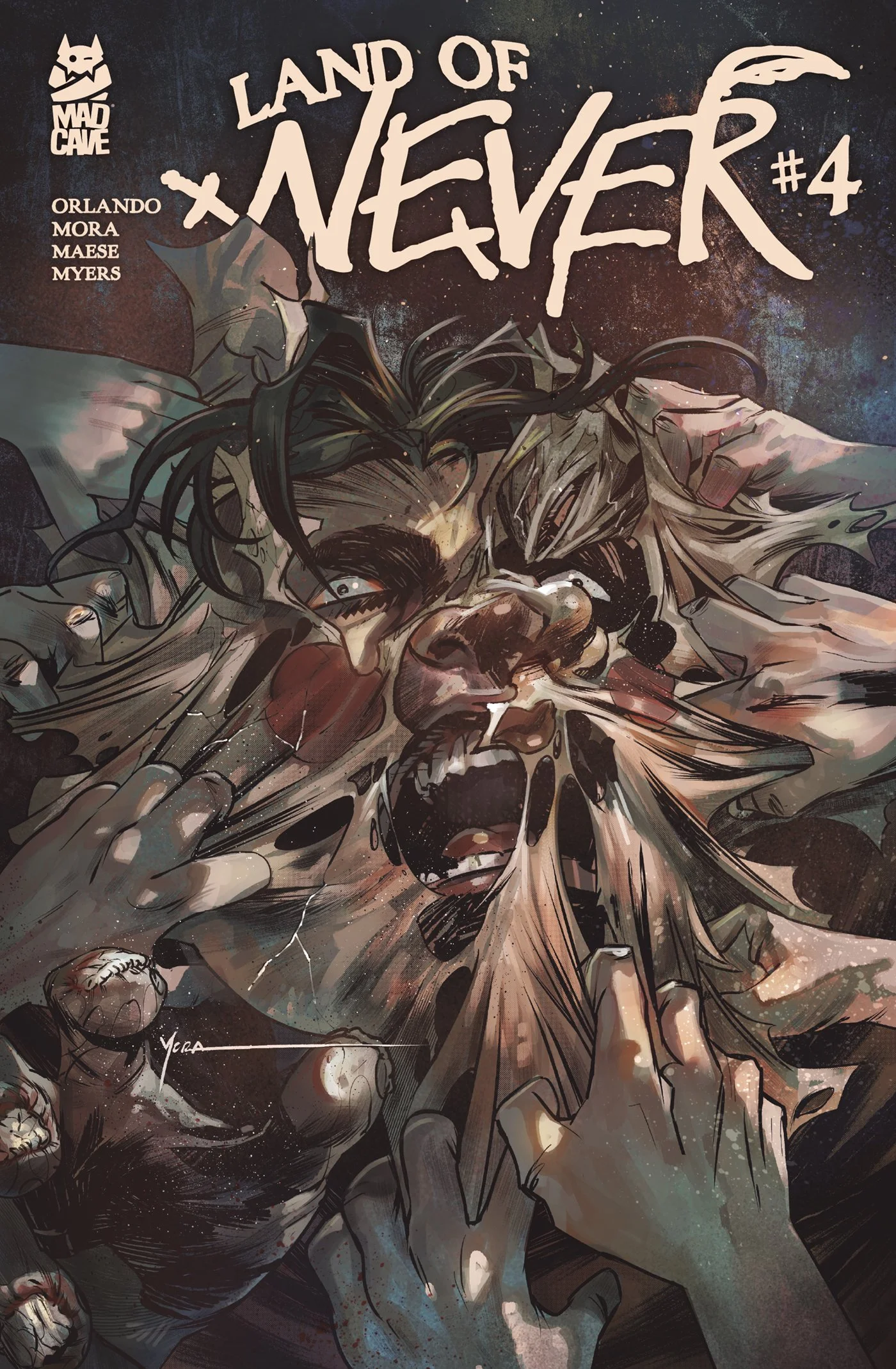
Credit: Mad Cave Studios
*** POSSIBLE SPOILER WARNING ***
WRITING:
This issue continues to build on Peter’s unraveling and the increasingly fragile world he is trying to create. Steve Orlando carefully sows the seeds of discontent among the children, allowing their doubts to grow from quiet unease into the beginnings of open mutiny. Peter believes he can hold his makeshift family together through authority and fear, but every attempt to force his will only exposes the hypocrisy at the heart of his promises. The children are beginning to understand that he is becoming no different from the people and systems he claimed he would save them from. In contrast, Wendy gives them the patience, comfort, and motherly nurturing they have been missing. Their growing preference for her is not simply a rejection of Peter; it is a recognition that genuine care cannot be demanded or enforced. That realization drives a dangerous wedge between Wendy and Peter. Because Peter has already shown that he cannot tolerate challenges to his control, Wendy’s influence places her directly in his path. Orlando steadily increases that tension, making the threat against her feel inevitable before introducing another unexpected turn that complicates the conflict.
While this conflict unfolds in “Neverland”, Doctor Williams provides Smith and Hoke with more of Peter’s history and explains what happened to him at the orphanage. Through her account, Orlando paints a disturbing picture of abuse, neglect, and confinement, giving the reader a clearer understanding of the trauma that shaped Peter’s need for control and his distorted idea of family. These revelations make him a more sympathetic character without excusing the cruelty of his present actions. In fact, the contrast makes him even more unsettling: the reader can recognize the wounded child beneath the Floating Man while also seeing how that pain has hardened into instability and violence. The backstory therefore does more than reveal Peter’s identity or fill in missing pieces of the mystery. It adds emotional complexity to a character who might otherwise function only as a frightening antagonist. By connecting Peter’s past suffering to the world he has built and the way he treats the children, Orlando deepens both the central conflict and the tragedy surrounding him. At the same time, the information given to Smith and Hoke expands the larger story, bringing the investigation and the events in Neverland closer together while continuing to flesh out the mythology of this world.
ARTWORK:
The artwork in this issue captures the unease, decay, and escalating danger at the center of the story. Miguel Mora brings this nightmarish version of Neverland to life with environments that feel worn down, industrial, and hostile rather than magical or inviting. The battered structures, harsh surroundings, and general sense of neglect immediately distinguish this world from the familiar fairy-tale setting. Every location appears shaped by Peter’s instability, as though the environment itself has absorbed his anger and need for control. That visual approach reinforces the idea that this Neverland is not a refuge for children but a prison disguised as a home. Mora’s backgrounds also strengthen the tension surrounding the children’s rebellion. Even when Peter is not the sole focus of a scene, the oppressive setting keeps his presence hanging over the characters and reminds readers how difficult escape may be. The scenes at Doctor Williams’s house create a quieter but equally effective form of unease. Her home looks run-down and unkept, reflecting years of isolation, guilt, and emotional exhaustion. The disorder surrounding her feels less like simple neglect and more like a physical extension of her state of mind. She believes she is responsible for what Peter has become, and Mora makes her home resemble a self-imposed prison built from regret.
Doctor Williams’s character design further communicates the weight of that guilt. Mora presents her as someone who has fallen a long way from the confident and successful doctor she once was. Her tired expression, aged appearance, and worn-down posture reveal the emotional punishment she has inflicted on herself long before she explains it in words. She may not have a missing child like Smith or Hoke, but she looks every bit as devastated because she carries the belief that her past decisions helped create the danger they now face. This gives her scenes a strong visual sadness and makes her remorse feel genuine. Mora creates the opposite effect with Peter, whose design and body language make him appear increasingly intimidating. His presence dominates the children, emphasizing the imbalance of power between them and making their willingness to oppose him feel even more courageous. The children appear small and vulnerable beside him, but their growing unity gives the confrontation a clear David and Goliath quality. That contrast visually prepares readers for the struggle ahead while suggesting that Peter’s physical power may not be enough to stop the children once they fully reject his authority.
The colors bring Mora’s artwork together and establish the emotional tone of nearly every scene. Fares Maese uses a dark, restrained palette to fill the world with dread, despair, and a persistent sense of danger. The muted colors make Neverland feel drained of warmth and wonder, reinforcing how thoroughly Peter’s fantasy has deteriorated into something cruel and hopeless. Shadows and subdued tones also give the environments greater weight, making the industrial spaces feel colder and Doctor Williams’s home feel more isolated. Rather than overpowering the linework, Maese’s colors deepen its textures and guide the reader toward the emotional focus of each panel. Micah Myers complements those visuals with lettering that captures the story’s ominous tone while remaining clear and easy to follow. The flashback narration is especially effective because it delivers important information without crowding the images or interrupting their atmosphere. The placement and presentation of the captions allow the past to unfold naturally alongside the artwork, giving the revelations about Peter a deliberate, haunting rhythm. Together, the art, colors, and lettering create a cohesive visual experience that supports both the horror of Neverland and the quieter tragedy behind Peter’s origin.
Check Out My Review of LAND OF NEVER #3
Final Thoughts:
Land of Never #4 delivers a tense, revealing chapter that deepens Peter’s tragic history while pushing the children closer to rebellion. Steve Orlando’s layered writing and the art team’s bleak, atmospheric visuals keep the mystery compelling and set the stage for a dangerous confrontation. This series continues to surprise me and as it unfolds gets deeper and gloomier. If you’ve been sleeping on this series, it’s time to wake up and take a trip to Never Neverland.
FINAL GRADE: 8.7/10
Let me know your thoughts on Land of Never #4 in the comments below. Thanks for reading!