CULT-DE-SAC #1 (IGNITION PRESS)
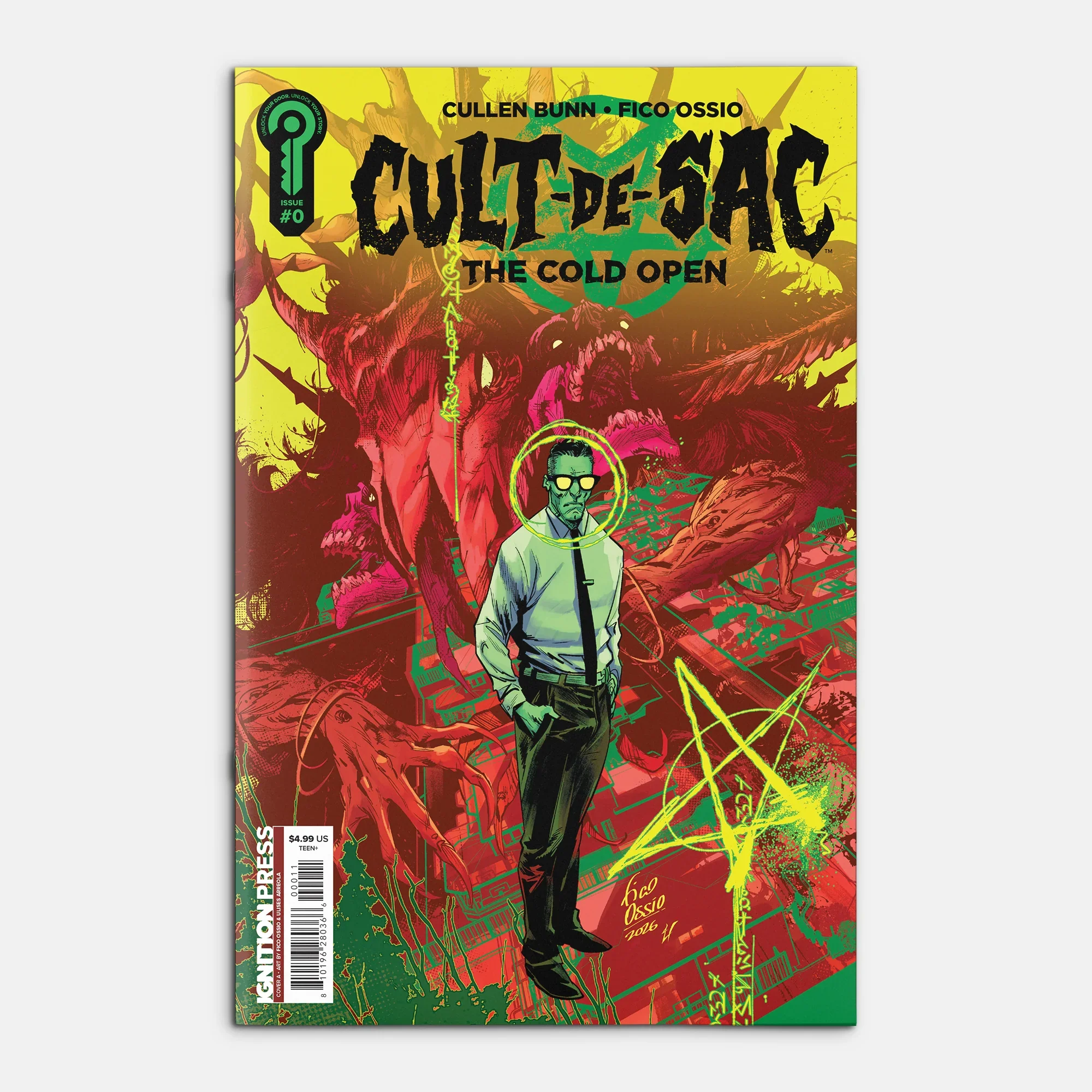
HOA’s are like a cult, but what if your HOA was really a cult? That’s what Cullen Bunn examines in Cult-de-Sac the newest series from Ignition Press. The Hanson’s have just moved to a beautiful, gated community called Willow Park. But the beauty of this idyllic neighborhood takes a bit of a hit when it comes to the overbearing rules of the HOA. However, things get weirder the more the Hanson’s learn about their new community.
Cult-de-Sac #1 – Written By Cullen Bunn – Art By Fico Ossio – Colors By Ulises Arreola - Letters By Andworld Design – Edited By Jamie S. Rich - Published By Ignition Press
Credit: Ignition Press
*** POSSIBLE SPOILER WARNING ***
STORY OVERVIEW:
Martin Hanson has taken a new job which causes him and his family to move. The new neighborhood that they bought a house in is a gated community called Willow Park. As they move into this idyllic neighborhood, they are greeted by their next door neighbors Gary and Monique. Everything is going fine until Gary introduces Martin to Harold Weems the President of the Willow Park HOA. Harold instantly starts in on the rules set forth by the Neighborhood Covenants. But what starts off as a rule thumping experience takes a weird turn when Harold asks a personal question about Martin’s children, Liv and Owen. After this incident weirder things start to happen including deliveries not being able to be made in the neighborhood, and all the children being home schooled. But it gets even more weird and strange, and Claire finds herself more suspicious of what’s actually going on in Willow Park.
WRITING:
This first issue does a strong job establishing Willow Park as the kind of setting that seems normal at a glance but becomes more unsettling the longer the Hanson family stays there. Cullen Bunn understands that the most effective horror does not always begin with obvious danger. Instead, he lets the discomfort build through ordinary neighborhood interactions, small details, and social rules that feel just a little too intense. On the surface, Willow Park looks like the ideal gated community: clean streets, attractive homes, friendly neighbors, and a promise of safety. That makes the creepier moments work even better because the horror is hiding behind something familiar and domestic.
The introduction of HOA President Harold Weems is where Bunn first lets the reader know that the community’s rules are more than just annoying neighborhood bureaucracy. At first, Harold comes across as the kind of overbearing HOA figure that anyone could recognize: strict, intrusive, and overly proud of the covenants. But Bunn quickly pushes that familiar irritation into something stranger when Harold asks whether Martin and Claire’s children have been baptized. That question changes the entire mood of the scene. It is too personal, too specific, and too connected to belief and ritual to feel like normal HOA business. Martin’s anger sells the immediate violation, while the moment also signals to the reader that Willow Park’s interest in the Hanson family goes far beyond property lines and lawn care.
What makes the writing effective is the way Bunn keeps layering these odd details without explaining them too quickly. The shadowy figures watching the family in the background create a constant sense of surveillance, making it clear that the Hansons are not simply new neighbors being welcomed into a community. They are being observed. The fact that food delivery drivers will not come into Willow Park and that all of the neighborhood children are homeschooled adds to that feeling of separation from the outside world. Each detail is strange on its own, but together they suggest a controlled environment where the residents are following rules that the Hansons do not yet understand.
Bunn also does a nice job using the family’s reactions to guide the reader’s own response. Claire’s growing suspicion is especially important because she begins to question the neighborhood before the full truth is revealed. Her unease gives the issue emotional grounding and keeps the mystery from feeling like a random collection of weird events. By the time the ending arrives, the story has built enough tension that the darker reveal feels earned rather than sudden. Bunn’s experience with horror shows in the pacing: he gives readers just enough information to understand that something is deeply wrong, but he holds back enough answers to make Willow Park feel dangerous, secretive, and worth returning to in the next issue.
ARTWORK:
The artwork in this first issue fits the story’s suburban horror tone extremely well. Fico Ossio presents Willow Park as a polished, attractive neighborhood that looks welcoming on the surface. The clean homes, orderly streets, and friendly neighborly body language give the community the appearance of a perfect place for the Hanson family to start over. That visual normalcy is important because it makes the unsettling details stand out more clearly. Willow Park does not look like a haunted location at first glance, which makes the feeling that something is wrong even more effective.
Ossio’s character work is one of the strongest parts of the issue. The Hanson family, Gary, and Monique all look grounded and believable, which helps the reader connect with the ordinary family drama at the center of the story. Harold Weems, however, is drawn with a much more intimidating presence. His posture, facial expressions, and glasses make him feel controlled and unreadable, as if he is hiding something behind his HOA authority. The artwork makes Harold uncomfortable before the story fully explains why he should be feared, and that gives his scenes an extra layer of tension.
The shadowy neighbors and background figures also add a lot to the book’s atmosphere. Ossio uses them to make Willow Park feel watched over and controlled, rather than safe and welcoming. Small visual details, like figures lurking in windows or standing just out of focus, create the sense that the Hansons are being monitored from the moment they arrive. These images help turn an otherwise normal neighborhood into a place that feels closed off from the outside world. The visual storytelling supports the mystery by constantly reminding the reader that there are secrets in this community.
Ulises Arreola’s colors strengthen that uneasy mood. The brighter suburban colors make Willow Park look appealing at first, but the darker tones and heavy shadows slowly shift the atmosphere toward something more sinister. That contrast between pleasant neighborhood visuals and ominous coloring makes the horror feel like it is hiding in plain sight. By the final page, the combined work of Ossio and Arreola has made the reader suspicious of nearly everyone in Willow Park. The art does not just illustrate the script; it actively builds the paranoia, tension, and cult-like feeling that make the issue work.
Check Out MY REVIEW OF RIPCORD #5
Final Thoughts:
Cult-de-Sac #1 is a strong debut that turns the familiar frustration of HOA rules into something much darker and more unsettling. Cullen Bunn builds the mystery at a steady pace, while Fico Ossio and Ulises Arreola make Willow Park feel both inviting and dangerous. With an eerie setting, an effective hook, and plenty of unanswered questions, this first issue gives readers a compelling reason to come back for more. This should be a must get at the LCS this week and if you are a horror fan this should be an easy addition to your Pull List.
FINAL GRADE: 9.6/10
Let me know your thoughts on Cult-de-Sac #1 in the comments below. Thanks for reading!