TRANSFORMERS #35 (SKYBOUND ENTERTAINMENT/IMAGE COMICS)
Energon supplies are running low for the Autobots on Earth, but this doesn’t stop them from helping and searching for answers. Wheeljack is on the Shard looking for solutions, Optimus is trying to save Shredhead and make sure the Decepticons are at bay, and the Aerialbots are on the hunt for the place Thundercracker swears he saw. As the teams are divided they all have threats they don’t know about yet.
Transformers #35 - Written By Robert Kirkman - Art By Jason Howard - Colors By Mike Spicer – Letters By Rus Wooten - Edited By Ben Abernathy - Published By Skybound Entertainment/Image Comics
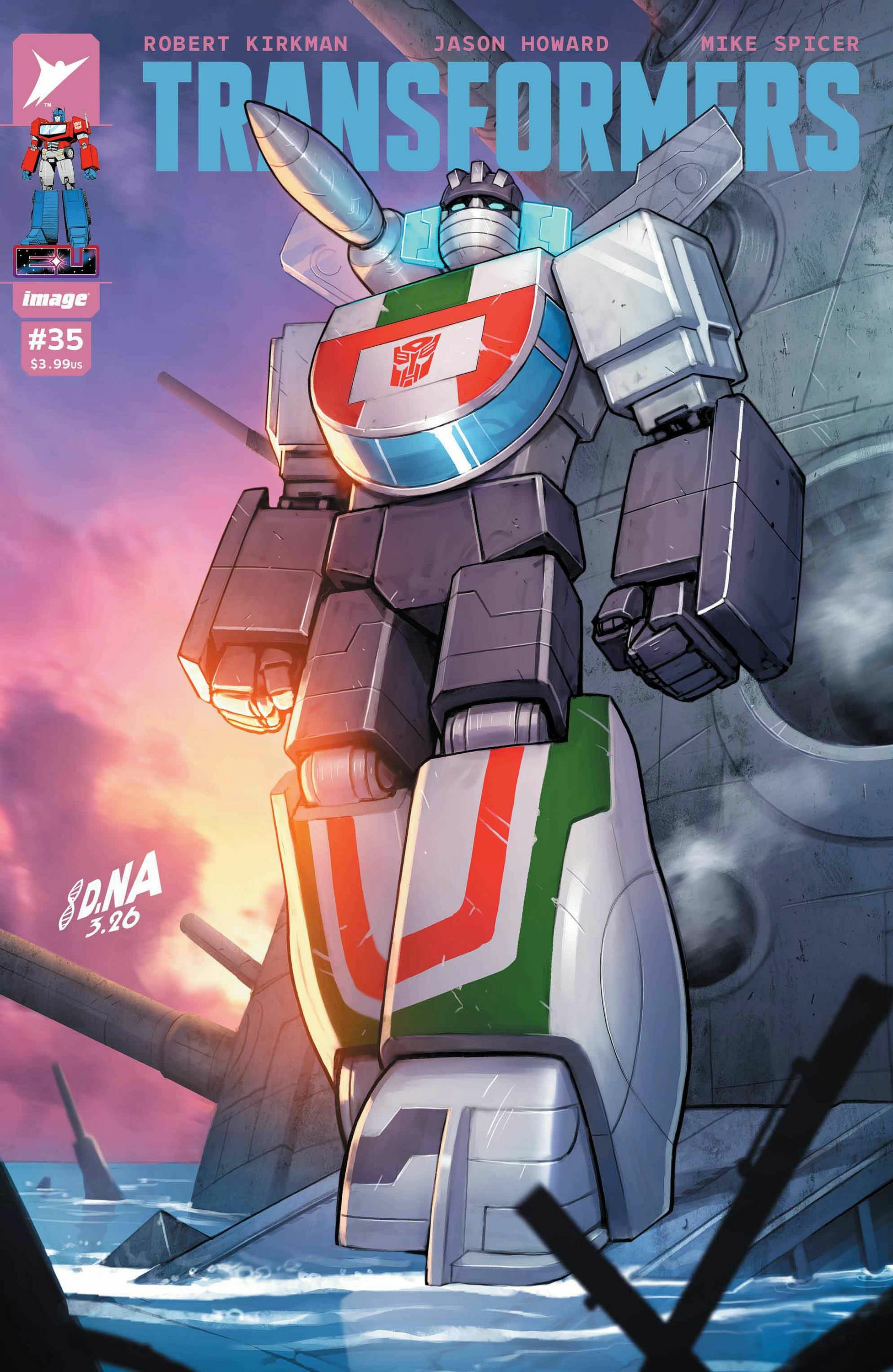
Credit: Skybound Entertainment/Image Comics
*** POSSIBLE SPOILER WARNING ***
STORY OVERVIEW:
Wheeljack is out on the Shard all by himself and he is building Exo-Suits and dabbling in other inventions like a mad scientist. However, he might want to keep his guard up as there is a threat coming from the sea. Meanwhile, Optimus is helping Cliffjumper with the severely injured Shredhead after their encounter with the Combaticons. Optimus lets Cliffjumper know he’s proud of him because even though Shredhead is injured they were able to take out Onslaught which stops the Combaticons from forming Bruticus. Now Optimus is relying on Flagg to help them save Shredhead. At the same time, the Aerialbots are in the Himalaya’s trying to find the realm that Thundercracker had found before. But they just walk into an ambush set by Skywarp that looks bleak until some unexpected help arrives.
WRITING:
As the drama on Earth heats up, the Autobots find themselves stretched thinner than ever, and Robert Kirkman uses that pressure to make the issue feel tense even when the story is moving across several different locations. Rather than focusing on one central conflict, Kirkman builds the issue around multiple problems happening at once, which gives the issue the feeling that the Autobots are losing control of the board piece by piece. Wheeljack is isolated on the Shard, Optimus is forced to deal with the aftermath of Shredhead’s injuries, and the Aerialbots are chasing Thundercracker’s lead into dangerous territory. Each thread has its own immediate stakes, but together they create a larger sense that the Autobots are vulnerable because they cannot be everywhere at once.
Kirkman does a strong job of turning that vulnerability into momentum. Thundercracker’s almost desperate need to find this Shangri-La-like place gives the Aerialbots a clear purpose, but it also blinds them to the danger they are walking into. Their ambush by Skywarp works because it feels like the natural consequence of the Autobots being too focused on answers and not focused enough on their surroundings. The arrival of an unexpected new combatant then gives the scene a jolt of energy and introduces another exciting wrinkle to the Energon Universe. That kind of surprise has been one of Kirkman’s biggest strengths throughout the series. He knows how to make the world feel bigger without derailing the main story, and every new reveal feels like it could shift the balance of power moving forward.
The issue also benefits from how Kirkman handles the fallout from Shredhead’s severe injury. The situation creates urgency because the Autobots are not simply trying to win a fight; they are trying to keep one of their own alive. At the same time, Kirkman avoids making the injury feel like empty shock value. Optimus reminding Cliffjumper that Shredhead’s sacrifice helped neutralize Onslaught gives the moment extra weight, because it shows that their pain came with a meaningful victory. Taking Onslaught off the board prevents the Combaticons from forming Bruticus, which reframes the loss as part of a larger strategic win. That balance between emotional consequence and tactical storytelling helps the issue feel more layered than a simple setup issue.
Optimus also stands out in this section of the story because Kirkman continues to write him as a leader who is carrying enormous responsibility without losing his empathy. His exchange with Cliffjumper is brief, but it reinforces the humanity and compassion that have made this version of Optimus so compelling. He understands the cost of the war, but he also knows his team needs reassurance when things look bleak. Those smaller character beats are important because they keep the issue from becoming only about plot movement. They remind the reader that the Autobots are not just reacting to battles and threats; they are trying to survive the emotional weight of this conflict together.
Wheeljack’s storyline adds another layer of intrigue because Kirkman keeps the details of his work deliberately vague. Seeing him build Exo-Suits and experiment on the Shard gives the impression that he is trying to solve impossible problems through sheer invention, but there is also a noticeable unease surrounding him. The mystery of what he is creating, combined with the suggestion that he may be pushing himself too far, sets the table for something potentially volatile in the not-too-distant future. That thread works especially well because it does not need a big reveal yet. The uncertainty is enough to make the reader wonder whether Wheeljack’s inventions will become the Autobots’ salvation, their next problem, or possibly both.
ARTWORK:
The artwork in this issue continues to deliver on everything the story is doing while still giving the book a visual identity that feels distinct from the earlier parts of the series. At first, the different style that Jason Howard brought to the series was not my favorite in this run, but his work has really grown on me. The more time he spends with these characters, the more his approach feels like a natural fit for this current stage of the story. There is a rougher, more energetic quality to his line work that matches the pressure the Autobots are dealing with, and it helps make the issue feel tense even in scenes that are more focused on setup than full-scale action.
One of Howard’s biggest strengths in this issue is how much personality he gives each Transformer. The designs do not feel interchangeable, and even when the characters are standing around talking or reacting to a stressful situation, their body language helps sell who they are. Optimus has the presence and weight you expect from him, while Wheeljack’s scenes carry a different kind of nervous invention and controlled chaos. That care in making sure the Transformers have their own visual flair adds a lot to the storytelling because it allows the reader to feel the difference between each subplot before the dialogue even fully explains what is happening.
The action scenes are also paced very well. Howard makes sure the fights have weight, direction, and purpose instead of simply existing to fill an action quota. The ambush involving the Aerialbots works especially well because the layouts make the danger feel sudden and overwhelming. The reader can understand where the characters are, what they are trying to do, and how quickly the situation turns against them. That clarity is important in a book with large robotic characters, aerial combat, and multiple moving pieces, and Howard keeps the energy high without letting the pages become visually confusing.
The environments also help the issue feel bigger. The Shard, the Autobots’ base, and the Himalayas each have their own atmosphere, which reinforces the idea that the story is spreading across very different corners of Earth. The Shard feels strange, isolated, and dangerous, which makes Wheeljack’s work there feel even more unpredictable. The Himalayas, by contrast, give the Aerialbots’ search a grander and more mythic quality, especially because Thundercracker’s lead points toward a place that feels almost impossible. These different settings make Earth feel like a vast and varied battleground rather than just a generic backdrop for Transformer fights.
Mike Spicer’s colors bring even more life to the issue. His color choices help separate the locations from one another and give the pages a strong sense of mood. The brighter, colder tones of the mountain sequences contrast nicely with the more industrial and unnatural feeling of the Shard, while the character colors remain bold enough to pop against the backgrounds. Spicer’s work adds depth to Howard’s art and makes the pages feel more dynamic, especially during the action beats where the colors help emphasize motion, impact, and danger.
Overall, the artwork does a lot of heavy lifting in making this issue work. It gives the characters personality, keeps the action readable, and makes each location feel like its own distinct part of the larger conflict. Howard’s style may have taken some adjustment at first, but by this point it feels like an important part of the book’s identity. Combined with Spicer’s colors, the visuals help the issue feel urgent, cinematic, and connected to the emotional stakes of the story.
Check out MY review of transformers #34
Final Thoughts:
Transformers #35 is a strong setup issue that balances multiple storylines while still keeping the emotional and strategic stakes clear. It may move a little slower than some recent issues, but the groundwork it lays for Wheeljack, Optimus, the Aerialbots, and the larger conflict makes the issue feel important. With solid writing, strong visuals, and a few exciting surprises, Transformers remains one of the most consistent books in the Energon Universe.
FINAL GRADE: 9/10
Let me know your thoughts on Transformers #35 in the comments below. Thanks for reading!