ROOK: EXODUS #11 (GHOST MACHINE/IMAGE COMICS)
As the group tries to figure out how the spiders have corrupted the helmets that control the animals of Exodus. They are ambushed by Arachnid who is being controlled by the spiders much like Bloodhound. Can they rally together and defeat the enemy they can see, as well as the one they can’t?
Rook: Exodus #11 - Written By Geoff Johns – Art By Jason Fabok - Colors By Brad Anderson - Letters By Rob Leigh - Edited By Brian Cunningham - Published By Ghost Machine/Image Comics
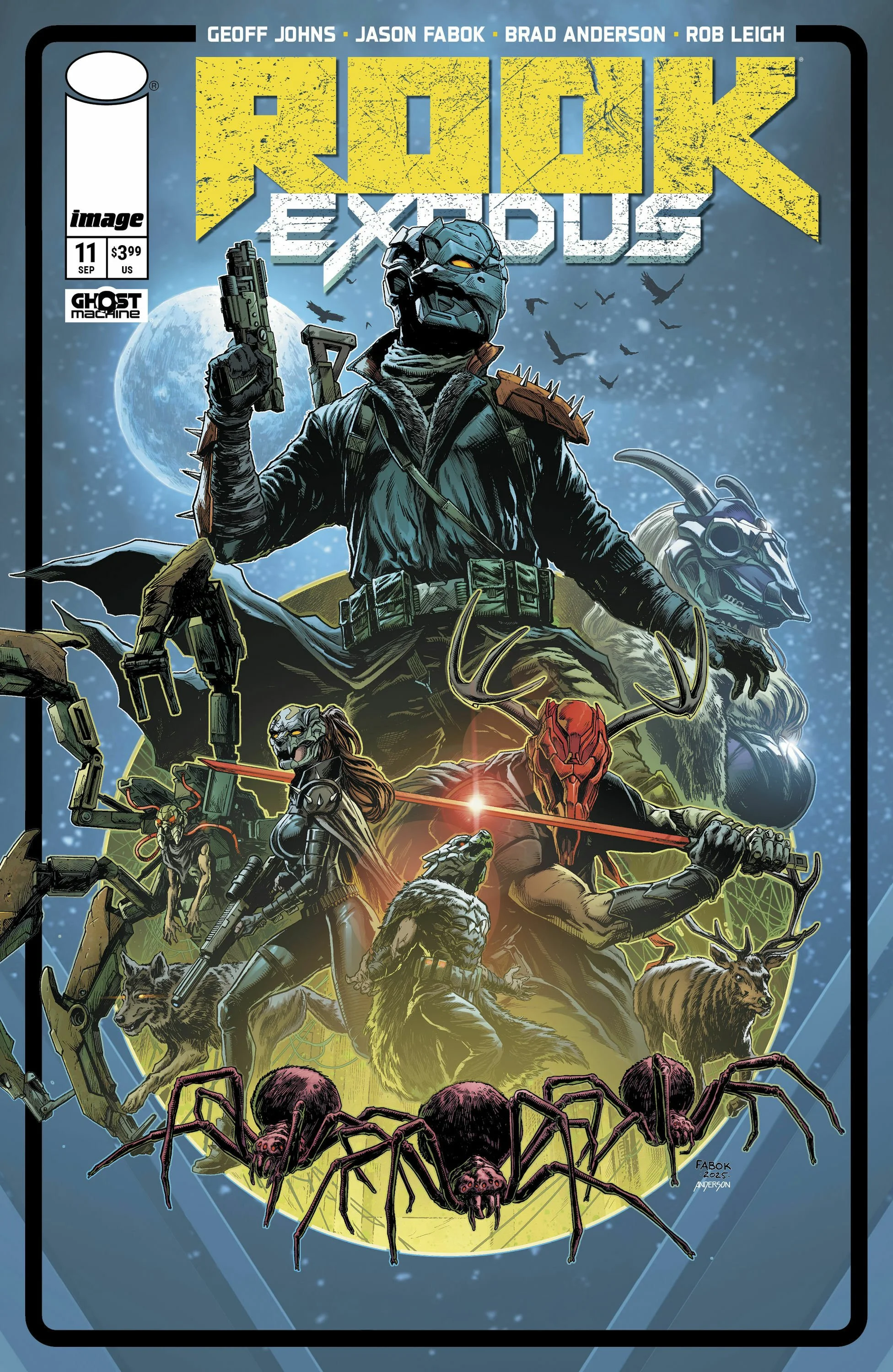
Credit: Ghost Machine/Image Comics
*** POSSIBLE SPOILER WARNING ***
STORY OVERVIEW:
After stopping Bloodhound and freeing him by removing his helmet. The group must come to grips with what he did while under the control of the spiders who corrupted his helmet. Matterhorn wants payback for the killing of his team; well Stag wants vengeance for the murder of his wife. As Dire Wolf tries to protect her father from their revenge, Rook steps in to get everyone on the same page. Putting their focus on fixing the engine, saving Arachnid, and stopping the spiders from corrupting anyone else. But just as they get on the move to get to where they need to be, they are ambushed by Arachnid and the spiders. As the team tries to fight them off, it’s clear that they are outmatched and outnumbered. They need a savior and they need that savior now.
WRITING:
The writing in this issue gives Geoff Johns a strong opportunity to dig into what makes this series work beyond the action and spectacle. The issue opens with the team still dealing with the damage Bloodhound caused while he was under the influence of the spiders, and Johns wisely does not rush past that fallout. Matterhorn and Stag’s anger feels earned because their losses are personal and traumatic. Matterhorn is grieving the loss of his team, while Stag is facing the murder of his wife, so their desire for revenge comes from a very understandable place. At the same time, Dire Wolf and Rook bring a different perspective because they understand that Bloodhound was not acting fully of his own will. That makes the conflict much stronger because Johns avoids turning anyone into the clear villain of the argument. Everyone has a reason to feel the way they do, and that makes the tension inside the group feel honest.
What makes this especially effective is that the emotional conflict is tied directly into the larger plot. The same corruption that turned Bloodhound into a weapon is still a threat to everyone wearing a helmet, which means the team is not just arguing about what happened in the past. They are also staring at a possible future where any one of them could be used against the others. That gives the issue a constant feeling of unease. Even when the heroes are standing together, Johns makes it clear that their unity is fragile. Rook’s attempt to calm everyone down and redirect their attention toward fixing the engine, saving Arachnid, and stopping the spiders shows why he continues to be such an important presence in the story. He is not only trying to lead the mission; he is trying to hold the team together before grief and anger tear it apart.
Johns also does a great job using dialogue to show where each character is emotionally. The conversations do not feel like simple exposition because the characters are speaking from pain, fear, guilt, and survival instinct. Stag and Matterhorn bring raw anger to the scene, while Dire Wolf’s defense of her father adds a more personal and protective layer. Rook’s voice cuts through the chaos because he is thinking about the bigger picture, but Johns does not make his position feel easy either. There is still a moral weight to the choice of letting Bloodhound live, especially when people have died because of what he did. That kind of moral tension gives the issue more depth and keeps the reader invested in the characters’ decisions instead of only waiting for the next fight scene.
Once Arachnid attacks, the issue shifts from tense character drama into full-blown survival mode, but the action still feels connected to everything that came before it. Arachnid is not just another enemy for the team to fight. Like Bloodhound, he represents the terrifying possibility that the spiders can take something familiar and turn it into a threat. That makes the battle feel more tragic and more dangerous at the same time. The heroes are not only trying to survive the attack; they are also trying to save someone who has been taken over. Johns uses that setup to keep the action from becoming empty spectacle. Every punch, swarm, and desperate move carries the added pressure of knowing that the team is fighting an enemy they may not actually want to destroy.
The pacing is one of the strongest parts of the writing. The issue has a lot going on, but Johns gives each beat enough space to matter. The opening argument slows things down just enough to let the reader feel the emotional damage left behind by Bloodhound’s actions. Then, when Arachnid and the spiders strike, the story accelerates and the danger becomes immediate. That shift works because the issue has already established how divided and vulnerable the group is. The fight does not interrupt the drama; it raises the stakes of it. Rook feeling the pain of his birds is another smart detail because it turns his power into a liability at the worst possible time and makes the violence feel more personal to him.
By the end of the issue, the writing has successfully built a sense of desperation without making the issue feel hopeless. The team is battered, outnumbered, and still emotionally fractured, but Johns keeps pushing the story forward with clear goals and strong momentum. The surprise arrival during the fight works as an exciting moment in the fight when it looks like all hope is gone. On the other hand, the last pages give the reader a real gut punch as we realize that this is far from over and now the stakes have gotten even more dire. Overall, Johns delivers an issue that balances character conflict, moral uncertainty, action, and suspense in a way that makes the issue feel important to the larger story. The writing makes the reader care about the people inside the battle, which is what gives the big action moments their real impact.
ARTWORK:
The artwork in this issue does a great job of making Exodus feel dangerous before the action even begins. Jason Fabok gives the environment a harsh, hostile quality that immediately puts the reader on edge. The world around the characters does not feel like empty background space; it feels like another threat they have to survive. The rocky terrain, heavy shadows, and tight staging make the setting feel oppressive, which works perfectly with the group’s emotional state. Before Arachnid and the spiders attack, the visuals already communicate that this is not a safe place for the team to stop, argue, or fall apart.
Fabok also continues to make every member of the group feel visually distinct. Each character has a different silhouette, costume language, and physical presence, which helps the reader understand who they are even before they speak. That individuality matters in an issue built around disagreement and tension. Matterhorn, Stag, Dire Wolf, Rook, and Bloodhound all carry themselves differently, and the artwork reflects the different emotions they are bringing into the scene. The expressions and body language help sell the anger, grief, defensiveness, and pressure inside the group, making the emotional side of the story land just as strongly as the action.
When the issue shifts into the fight with Arachnid, the artwork becomes much bigger and more chaotic in the best way. The scale of the spider assault is impressive because Fabok makes the swarm feel overwhelming without letting the pages become confusing. Arachnid’s attack has weight and speed, while the sheer number of spiders creates a constant sense of danger around the team. The panels capture the violence, movement, and desperation of the battle, but they also keep the reader grounded in what is happening to the characters. That balance is important because the scene needs to feel massive while still being easy to follow.
One of the strongest parts of the visual storytelling is how much emotion Fabok is able to bring into the battle. This is not drawn like a simple heroes-versus-monster fight. Arachnid is terrifying, but there is also tragedy in the fact that he is being controlled, just like Bloodhound was. The artwork sells that tension by making the team look overwhelmed, battered, and uncertain instead of simply heroic. Rook’s connection to his birds is especially effective visually because their suffering makes his own pain clear. Those moments give the action an extra emotional edge and remind the reader that the violence has real consequences for the characters.
Brad Anderson’s colors add a lot to the issue’s atmosphere and pacing. The quieter moments have a more restrained and muted feel, which matches the tension of the group trying to process what has happened. Once the attack begins, the colors become more intense, giving the fight more energy and making the danger feel immediate. Anderson’s choices help guide the reader through the emotional rhythm of the issue, moving from unease and grief into panic, violence, and survival. The colors do not just make the pages look good; they reinforce the mood of each scene.
Overall, the artwork is a major reason this issue feels so intense. Fabok delivers the scale and detail needed for a huge action sequence, but he also keeps the characters’ emotions at the center of the pages. Anderson’s colors strengthen that work by shifting the visual tone as the issue moves from character drama into full-scale chaos. Together, the art and colors make Exodus feel dangerous, the spider attack feel overwhelming, and the team’s desperation feel believable. The result is an issue that looks epic without losing the personal stakes that make the battle matter.
Check Out KEN’S REVIEW OF ROOK: EXODUS #10
Final Thoughts:
Rook: Exodus #11 is a tense and exciting issue that balances strong character conflict with big, chaotic action. Geoff Johns keeps the emotional stakes high as the team struggles with trust, guilt, and survival, while Jason Fabok makes the spider attack feel dangerous and overwhelming. With a strong cliffhanger and plenty of momentum, this issue sets up the next issue in a major way. If you are like me and have fallen off from reading this series for one reason or another, it’s time to get back into it. The excitement and drama are at a fever pitch and promise to only build up more. This should be on top of your list when headed to the shop this week.
FINAL GRADE: 9.5/10
Let me know your thoughts on Rook: Exodus #11 in the comments below. Thanks for reading!