ONLY THE SAVAGE ARE LEFT #4 (Dark horse comics)
Ryder and Fionn somehow escape the attack of the monsters and the gang that has captured Oaklynn. However, they are not out of danger from monsters yet, and they also still have the infection they need to deal with before they turn more. Meanwhile, Oaklynn finds herself having to choose between her freedom and saving the two men she loves. If this wasn’t emotional enough, Ryder must finally choose to save his humanity or embrace the monster inside.
Only The Savage Are Left #4 - Written By Zack Kaplan – Art By Stefano Raffaele - Colors By Thiago Rocha – Letters By Hassan Otsmane-Elhaou - Edited By Spencer Cushing - Published By Dark Horse Comics
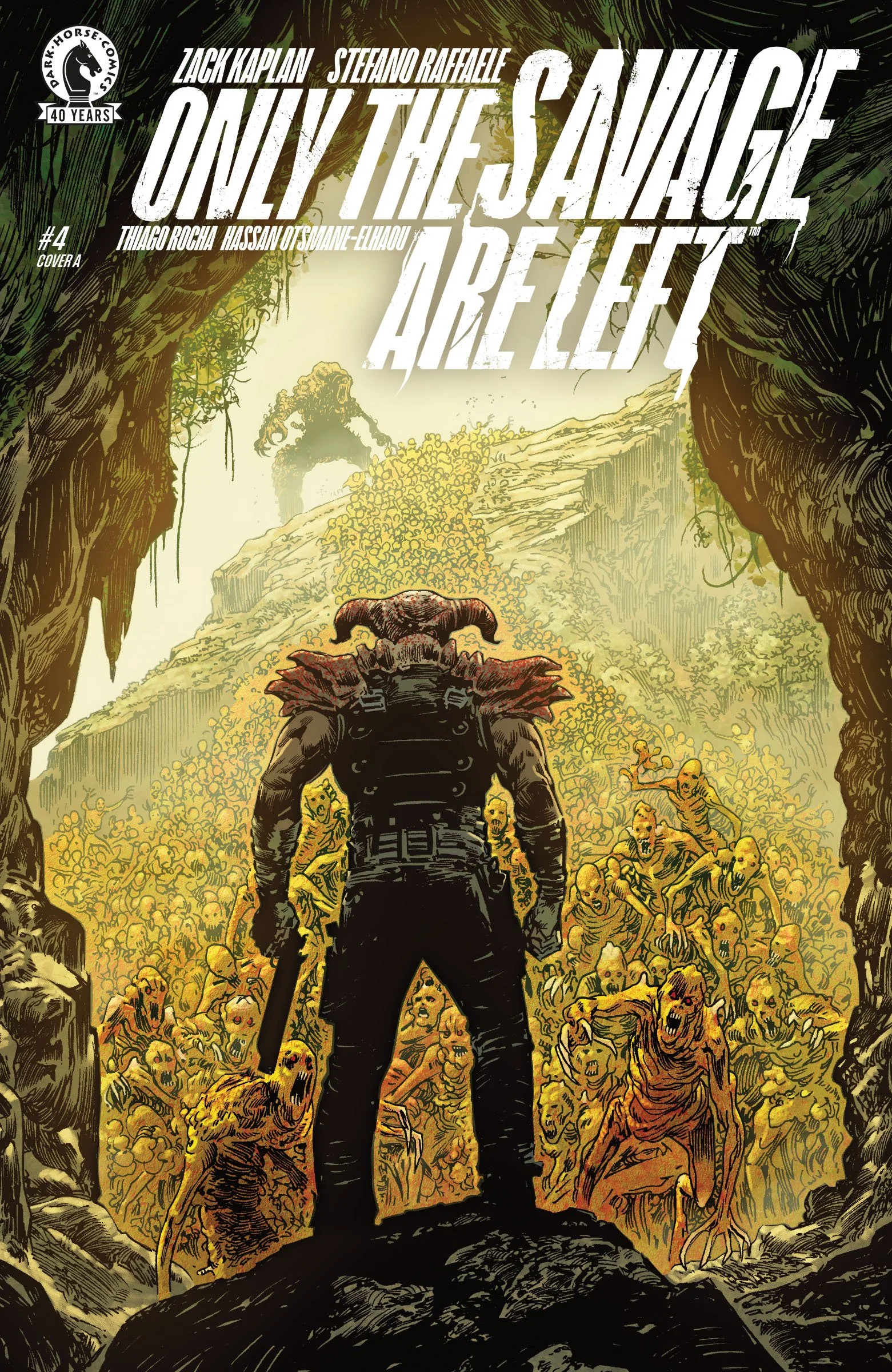
Credit: Dark Horse Comics
*** POSSIBLE SPOILER WARNING ***
WRITING:
The deeper this series moves into its apocalyptic nightmare, the more effectively it pulls the reader into the emotional lives of its characters. Zack Kaplan does not rely only on monsters, violence, or the threat of infection to create tension. Instead, he squeezes emotion from every decision and repeatedly forces the reader to consider what humanity actually means when compassion can become a liability. This issue gives Ryder an opportunity to reveal a far more aggressive and capable side of himself than we have seen before. His willingness to confront both the giant monster and the gang leader demonstrates remarkable courage, especially when either opponent could easily overwhelm him. Yet Kaplan wisely complicates that bravery by leaving open the question of whether Ryder is acting entirely of his own free will or whether the worsening infection is changing his instincts. Is this newfound ferocity evidence of personal growth, or is the monster inside him beginning to take control? That uncertainty makes every heroic moment feel dangerous. Whatever the answer, Ryder’s development is impossible to ignore, and the tension between his desire to remain human and his growing capacity for brutality makes his arc more compelling with every issue.
The supporting cast is equally important to the momentum of the story, and this issue gives both Oaklynn and Fionn meaningful opportunities to reveal how much they have changed. Each character shows a greater capacity for compassion, even as the circumstances around them become more desperate. Oaklynn’s willingness to risk her freedom for Ryder and Fionn gives her conflict real emotional weight, because her choice is not simply about escaping captivity; it is about deciding how much of herself she is willing to surrender to protect the people she loves. Fionn also appears increasingly prepared to sacrifice himself for a larger purpose, despite the harsher instincts and questionable choices that have shaped him throughout the series. Their actions feel genuinely unselfish, but they are not easy or sentimental. Both characters understand the likely cost of what they are considering, which makes their decisions more powerful. By placing Ryder, Oaklynn, and Fionn on parallel paths of sacrifice, Kaplan shows that their growth is tied not only to survival, but also to the difficult question of what, and who is worth surviving for.
The issue’s main weakness is that the storytelling briefly loses some of its focus in the middle. Kaplan moves between different time frames, locations, and points of conflict in quick succession, and the transitions are not always clear enough to orient the reader immediately. The fractured structure appears intended to heighten urgency by showing several dangers unfolding at once, but it occasionally has the opposite effect. Rather than sharpening the tension, the jumps can interrupt the emotional momentum and make it difficult to determine exactly when certain events are happening in relation to one another. This confusion never lasts long enough to derail the issue completely, and Kaplan eventually brings the separate threads back together with purpose. Still, the middle section requires more effort from the reader than it should, particularly in an issue already balancing captivity, infection, monstrous threats, and shifting loyalties. A few cleaner transitions or stronger visual cues could have preserved the intended pace without sacrificing clarity.
If there is one area in which Kaplan consistently stands above much of the industry, it is his ability to construct a final-page cliffhanger that feels earned rather than forced. He understands how to build an issue around mounting questions, tighten the pressure scene by scene, and then end at the precise moment when the reader most needs an answer. The cliffhanger here succeeds because it grows directly from Ryder’s worsening infection, the characters’ competing sacrifices, and the moral choices that have defined the issue. It is not simply a shocking image added for effect; it changes how the reader interprets what came before and immediately raises the stakes for what follows. The final beat leaves several emotional and practical consequences hanging in the balance, making the wait for the next issue feel especially difficult. This is one of Kaplan’s strongest endings in the series so far, and it is exactly the kind of conclusion that will spark conversation in comic shops and keep readers speculating until the next issue arrives.
ARTWORK:
The artwork in this issue does more than bring this savage world to life; it makes the emotional toll of the story visible in nearly every setting and expression. Stefano Raffaele presents an apocalyptic landscape that feels damaged, abandoned, and increasingly hostile, using ruined structures, worn surfaces, and empty spaces to suggest a world that has been deteriorating for a long time. Each new location appears more desolate than the last, reinforcing the sense that Ryder, Fionn, and Oaklynn have few safe places left to run. The environments are not simply backgrounds for the action. They become an extension of the characters’ fear, exhaustion, and fading hope, making the world itself feel like another threat closing in around them. This bleak atmosphere becomes even more effective when contrasted with the bright, peaceful flashback sequences. Those scenes offer brief glimpses of warmth and normalcy, but their happiness also makes the present feel more painful by reminding the reader of everything the characters have lost and may never recover.
The character and monster designs are equally striking, immediately capturing the reader’s attention while also revealing important details about the story. The monsters possess enough size, texture, and physical menace to feel genuinely dangerous, but Ryder’s changing appearance is the most memorable visual element in the issue. As his infection worsens, his face becomes an outward representation of the conflict taking place inside him. One half appears corrupted and increasingly monstrous, while the other retains the softer, more innocent features of the person he once was. That division gives his design a powerful visual symmetry and allows Raffaele to communicate Ryder’s struggle without relying on dialogue or narration. Every close-up becomes a reminder that Ryder is caught between two identities: the human being who wants to protect the people he loves and the monster whose strength may be necessary for survival. The design therefore works on both a physical and symbolic level, making his transformation disturbing, tragic, and impossible to ignore.
The action sequences deliver the excitement and suspense needed to balance the issue’s heavier emotional material. When violence erupts, it feels sudden, forceful, and dangerous rather than overly polished or predictable. Raffaele gives the confrontations a strong sense of impact through aggressive movement, imposing threats, and compositions that keep the characters looking vulnerable even when they fight back. The reader is never allowed to feel completely certain that Ryder, Fionn, or Oaklynn will survive, because every attack appears capable of causing lasting damage. That uncertainty keeps the tension high and prevents the battles from becoming empty spectacle. The action also provides a visual change of pace from the quieter conversations and moments of sacrifice, but it never feels disconnected from the emotional story. Instead, each burst of violence adds another layer of pressure to the characters’ decisions, showing that they must confront both the monsters around them and the fear, infection, and desperation growing within them.
The color choices strengthen the artwork and play a major role in establishing the mood of each scene. Thiago Rocha gives the ruined present a harsh, uneasy atmosphere, helping the devastated environments, infected bodies, and violent encounters feel even more threatening. By contrast, the warmer and brighter flashbacks separate the past from the present at a glance, allowing the reader to understand the shift in time while also feeling the emotional distance between what the characters once had and what their lives have become. The colors do not merely decorate Raffaele’s linework; they guide the reader’s attention, sharpen key moments, and make the tone of each sequence immediately recognizable. Hassan Otsmane-Elhaou’s lettering provides the same kind of clarity in the storytelling. The placement and presentation of the dialogue and narration lead the eye naturally across the page without obscuring the artwork, while changes in emphasis help important words and emotional beats land with greater force. Together, the colors and lettering make the issue easy to follow while ensuring that its fear, urgency, and sorrow remain present in every scene.
Check Out MY REVIEW OF ONLY THE SAVAGE ARE LEFT #3
Final Thoughts:
Only The Savage Are Left #4 delivers intense character drama, brutal action, and striking artwork as Ryder, Fionn, and Oaklynn face increasingly difficult choices. Although the shifting timelines briefly disrupt the flow, the emotional stakes and excellent cliffhanger make this another gripping installment. This is one of the best series out right now and if you haven’t been reading it, you are doing yourself a disservice. Grab a copy of this issue and give this series a shot, I promise you won’t be disappointed.
FINAL GRADE: 9.5/10
Let me know your thoughts on Only The Savage Are Left #4 in the comments below. Thanks for reading!