NARCO #4 (IMAGE COMICS)
As Marcus continues to lose friends and allies his luck gets even worse as his apartment catches on fire. Now he must find somewhere to stay and find whoever is setting him up all on his own. But if he hopes to stop all this, he needs to learn to think outside the box.
Narco #4 – Written By Doug Wagner – Art By Daniel Hillyard – Colors By Dave Stewart – Letters By Ed Dukeshire – Edited By Kevin Gardner - Published By Image Comics
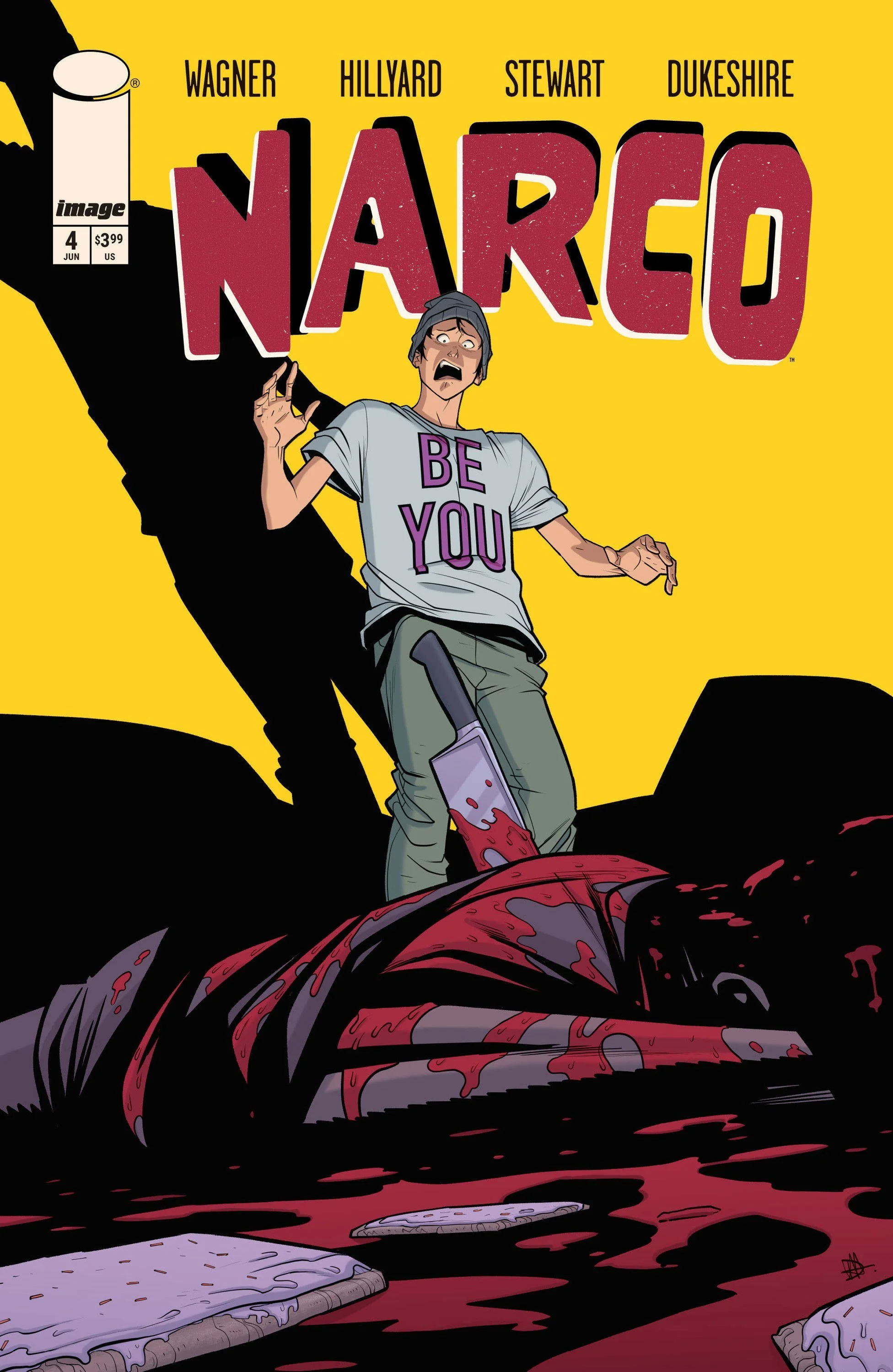
Credit: Image Comics
*** POSSIBLE SPOILER WARNING ***
STORY OVERVIEW:
Marcus gets a visit from Dean, to which he finds out Dean is upset with him for letting Kase know he was suspect. He explains that he can longer help him because he crossed too many lines. Being all alone now Marcus ends up passing out and when he comes to his apartment is on fire. But before he can escape, he starts to pass out again. Thankfully Kase shows up and helps him escape the blaze, and although they aren’t seeing eye to eye offers him a place to stay. Marcus then goes to clear his mind and hang out with his opossum. That’s when it hits him who the killer who is setting him up is. He just hopes he’s in time to get help to prove who it is.
WRITING:
This issue significantly escalates the story and gives the mystery a sharper, more urgent rhythm. Doug Wagner keeps the pacing tight by stacking one complication on top of another, forcing Marcus into a situation where he has almost no time to breathe, think, or recover. The amount of information coming at the reader could have easily felt overwhelming, but Wagner uses that pressure to mirror Marcus’s own mental state. Every new setback makes the walls feel like they are closing in, and that creates a strong sense of paranoia throughout the issue.
One of the strongest parts of the writing is the way Wagner continues to isolate Marcus from the people who might have been able to help him. Dean pulling away from him is not just another obstacle; it feels like a deliberate emotional blow that leaves Marcus more exposed than ever. The person setting him up is not simply trying to frame him but appears to be dismantling his support system piece by piece. That approach gives the story a cruel edge because Marcus is not only being hunted physically, but he is also being broken down psychologically as well.
The sadistic nature of the killer’s methods also makes Marcus a much more sympathetic character in this issue. Wagner piles so much misery onto him that the reader begins to feel the same exhaustion and frustration Marcus is carrying. The apartment fire is especially effective because it strips away one of the last remaining pieces of stability in his life. By the time Marcus reaches his realization about who may be behind everything, the moment feels earned rather than convenient. His epiphany comes from desperation, observation, and finally looking at the situation from a different angle.
The reveal itself works because Wagner has been careful not to overplay his hand. The killer has been hidden in plain sight, with only enough subtle clues sprinkled throughout the story to make the answer feel believable once it is uncovered. That balance is important in a mystery because the reveal needs to surprise the reader without feeling like it came out of nowhere. Here, the confirmation lands with impact and opens the door to a much bigger conflict moving forward. It changes the direction of the story while also making the reader want to go back and reconsider earlier moments with fresh eyes.
ARTWORK:
The artwork in this issue remains consistent with the visual identity the series has established so far, but it also finds new ways to heighten the tension. Daniel Hillyard keeps the linework clean and somewhat simplistic, which allows the reader to focus on the most important images without the pages feeling overcrowded. That stripped-down approach works especially well for a mystery because it can make the reader feel like the obvious details are the only ones that matter. At the same time, it quietly encourages a second look at the backgrounds, body language, and smaller visual choices that may be hiding something important.
This visual restraint also helps lull the reader into a false sense of security. Because the panels often appear straightforward at first glance, the sudden moments of danger or discovery hit much harder. Hillyard uses that contrast to build suspense, making even quieter scenes feel uneasy because the reader starts to question what they might be missing. The artwork makes you want to go back and double-check each panel, which fits perfectly with the structure of a whodunit where every detail could potentially matter later.
Hillyard also does a strong job with the effect used whenever Marcus passes out. The visual shift clearly communicates that Marcus has lost consciousness, but it also gives the reader a sense of time slipping away from him. That is important because Marcus is already losing control of nearly every part of his life, and the artwork reinforces that feeling by making his own body feel unreliable. Those moments are disorienting without becoming confusing, which makes them effective from both a storytelling and visual standpoint.
The gorier and more traumatic images are used carefully but still manage to shock when they appear. Hillyard does not let the violence feel random or empty; instead, those harsher visuals remind the reader that this is still a murder mystery with real danger behind every reveal. The brutality gives the issue a sharper edge and makes the stakes feel more personal for Marcus. It keeps the horror elements present without allowing them to overpower the mystery at the center of the story.
The subdued colors also play a major role in the issue’s uneasy atmosphere. Dave Stewart leans into blues, grays, and other muted tones that make the world feel cold, worn down, and emotionally drained. Instead of making the pages pop in a flashy way, the colors create a faded quality that fits Marcus’s exhaustion and confusion. This palette also makes the reader pay closer attention because nothing is overly exaggerated or loudly presented. The quieter colors pull you into the panels and encourage you to search for hidden clues in the same way Marcus is trying to piece everything together.
CHECK OUT MY REVIEW OF NARCO #3
Final Thoughts:
Narco #4 brings more desperation to Marcus’ plight well also shining light on who the killer is. This gives the reader a sense of the light at the end of the tunnel. However, there is still plenty of tunnel left which allows for even more shenanigans to occur before we get to the finish. This series has been a treat and has delivered on so many levels. This is another series that I hope you as a reader haven’t been sleeping on. If you need to catch up on the series, consider picking up some of the Hitchcock inspired variant covers as they are awesome looking.
FINAL GRADE: 9.5/10
Let me know your thoughts on Narco #4 in the comments below. Thanks for reading!