MASTERS OF THE UNIVERSE: GENESIS #2 (Dark horse comics)
As Skeletor’s rise to power continues, he also continues to assemble his team of familiar henchmen. But not all of these would be allies are on the same page with him right away. However, they as well as us, find out why Skeletor is a legit badass.
Masters of the Universe: Genesis #2 - Written By Rich Douek – Art By Gavin Smith - Colors By Fabi Marques - Letters By Andworld Design - Edited By Brett Israel - Published By Dark Horse Comics
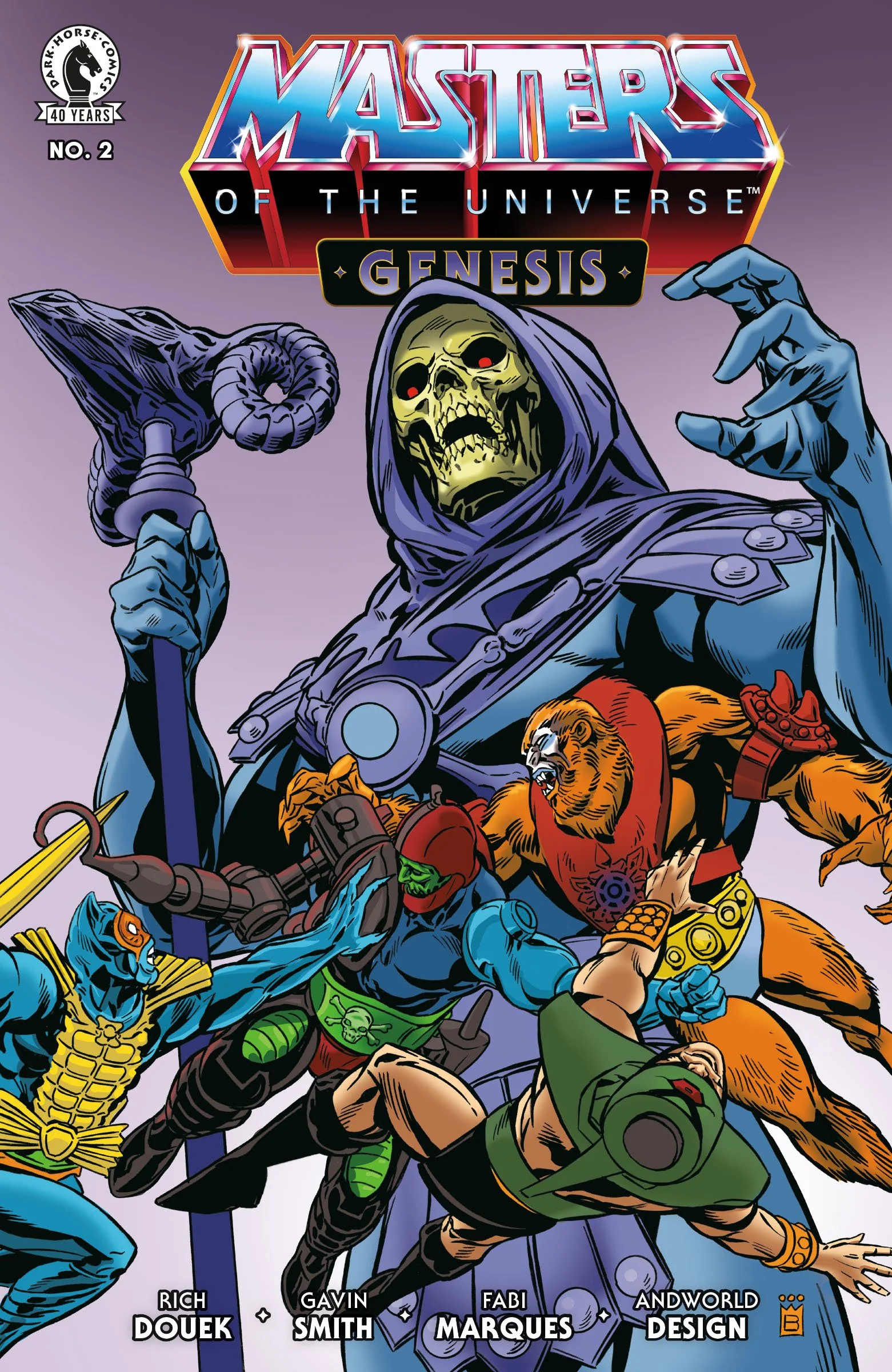
Credit: Dark Horse Comics
*** POSSIBLE SPOILER WARNING ***
STORY OVERVIEW:
Skeletor’s journey to assemble a new team that can take down Hordak, the Horde, and conquer Eternia and beyond continues. Skeletor, Beast Man, and Mer-Man, first seek out Tri-Klops. Skeletor knows he can use his tracking skills as well as his talents as a fighter to their advantage. All it takes Tri-Klops to agree to join is money, he is a mercenary after all. After he joins, they start to track their way through the snowy and cold mountains to find the cave where Trap Jaw has set up his makeshift machine shop. Unlike Tri-Klops, Trap Jaw is not as easily persuaded, which leads to a battle to try and force him to join. Meanwhile in Operon, we find out that the king is being influenced by someone who is evil to say the least.
WRITING:
Issue two picks up immediately with Skeletor continuing the deliberate process of building the force that will eventually become his empire. Rich Douek uses that familiar premise to do more than simply introduce recognizable villains one after another. He explores what Skeletor sees in each potential recruit, what those characters want in return, and why dangerous figures such as Tri-Klops and Trap Jaw would choose to follow him rather than challenge him for power. That approach gives the issue a clear purpose: every encounter expands the cast while also revealing another layer of Skeletor’s intelligence, ambition, and ability to control a situation.
Douek’s portrayal of Skeletor is especially effective because it pushes against the bumbling, easily defeated version of the character that many viewers remember from earlier adaptations. Here, Skeletor is calculating, confident, and genuinely frightening. He understands when money can secure someone’s loyalty, when intimidation is necessary, and when he must demonstrate his power personally. His recruitment of Tri-Klops shows his practical side: Skeletor recognizes the mercenary’s tracking ability and combat experience, then appeals directly to what motivates him. The encounter with Trap Jaw is very different. When persuasion does not work, Skeletor is willing to fight, proving that his authority rests on more than speeches and promises. By allowing him to succeed through strategy as well as strength, Douek makes his eventual rise feel earned instead of inevitable simply because readers already know where the story is headed.
This interpretation adds a compelling dimension that readers of the larger Masters of the Universe mythology may have rarely seen. Skeletor is not presented as a villain who accidentally gathers followers around him. He is actively identifying useful talents and assembling a team capable of confronting Hordak, the Horde, and anyone else who stands between him and control of Eternia. That makes the recruitment plot feel like an important stage in a larger campaign. Each new alliance brings him closer to becoming the ruler audiences recognize, while every display of competence makes the threat of that future empire more believable.
Douek also takes care to establish Tri-Klops and Trap Jaw as formidable characters in their own right. Tri-Klops is not included merely because he is a familiar face; his tracking skills, fighting ability, and mercenary outlook give him a specific function within the group. Trap Jaw, meanwhile, is introduced through the harsh mountain journey to his makeshift machine shop, a setting that immediately emphasizes his mechanical ingenuity and independence. His refusal to join without resistance is important because it prevents Skeletor’s growing army from feeling too easily assembled. The resulting confrontation shows that Trap Jaw is dangerous enough to be worth recruiting and stubborn enough that Skeletor must earn his submission. Making both characters credible threats strengthens their future positions in the story and gives the team a more convincing internal balance.
The issue still retains the franchise’s trademark humor, and Douek uses Beast Man and Mer-Man to keep the darker material from becoming too heavy. Their bickering, reactions, and occasional incompetence provide much needed comic relief, but the humor does not completely undermine the danger around them. Instead, it creates a useful contrast with Skeletor’s seriousness and control. The jokes arrive at natural pauses, allowing the story to breathe before returning to the threat of violence or the next stage of the journey. That balance helps the issue feel connected to the adventurous spirit of classic MOTU while still presenting a more intimidating version of its central villain.
The action is another major strength. The fight between Trap Jaw and Skeletor’s group is intense, easy to follow, and meaningful to the plot rather than being included only for spectacle. It tests the newly forming team, demonstrates Trap Jaw’s capabilities, and gives Skeletor another opportunity to prove why others should fear and follow him. Because the conflict grows directly out of Trap Jaw’s refusal, the battle also feels like a natural escalation of the recruitment attempt. It reinforces the idea that Skeletor’s empire will be built through a mixture of negotiation, manipulation, and overwhelming force.
Finally, the subplot in Operon and the last-page reveal widen the scope beyond Skeletor’s immediate mission. The suggestion that another popular character is influencing the king from the shadows introduces a second source of danger and raises questions about how these separate schemes will eventually collide. It is an effective cliffhanger because it offers recognition without explaining everything, giving longtime fans something to speculate about while remaining accessible to newer readers. By the end of the issue, Douek has advanced Skeletor’s origin, strengthened the supporting villains, delivered humor and action, and planted a larger mystery that should leave readers eager to see what happens next.
ARTWORK:
The artwork in this issue succeeds because it captures the recognizable visual identity of Masters of the Universe while still giving the world enough personality to feel fresh. Gavin Smith draws the cast with silhouettes, costumes, weapons, and facial features that immediately connect them to their classic appearances. Skeletor, Beast Man, Mer-Man, Tri-Klops, and Trap Jaw all look familiar at first glance, which creates a strong sense of nostalgia for longtime fans. That visual clarity also benefits the storytelling. Because readers can quickly recognize the characters and understand the basic qualities associated with their designs, the issue does not need to slow down for lengthy introductions or explanations. Smith can instead focus on how these figures move, interact, and occupy the world around them.
At the same time, Smith does not simply imitate earlier versions of the franchise. He adds small details and personal touches that make the characters fit the rougher tone of this origin story. Their expressions, body language, and physical presence help distinguish their personalities before the dialogue even does. Skeletor often appears composed and commanding, while the members of his growing group bring different kinds of energy to each scene. Trap Jaw’s design is especially effective within the setting of his makeshift machine shop, where the surrounding equipment reinforces his mechanical ingenuity and makes his introduction feel like a natural extension of who he is. These choices preserve the characters’ iconic qualities without making the art feel trapped by nostalgia.
Smith also continues to make Eternia feel massive, varied, and more geographically complex than a simple backdrop for heroic battles. The issue moves through lush forests, frozen mountain terrain, the cramped darkness of a dingy cave, and the polished opulence of Operon. Each location has its own visual character, and the transitions between them give Skeletor’s journey a real sense of distance and difficulty. The snowy mountains feel harsh and isolating, making the search for Trap Jaw seem dangerous even before the fighting begins. His cave workshop is tighter and more industrial, creating a strong contrast with the open wilderness outside. Operon, by comparison, appears controlled and prosperous, which makes the evil influence within the kingdom feel even more unsettling. This environmental variety expands the perceived scale of Eternia and suggests that the larger world contains many distinct cultures, climates, and threats.
The action sequences are another major visual strength. Smith presents the confrontation with Trap Jaw as chaotic and dangerous without allowing the pages to become confusing. There are several characters, attacks, and reactions competing for attention, yet the progression of the fight remains clear from panel to panel. The eye is guided toward the most important movement in each moment, so readers can understand who is attacking, how the others respond, and when the advantage shifts. The characters’ poses communicate weight and impact, giving the battle a physical quality rather than making it feel like a collection of static images. Just as importantly, the action reveals personality: Trap Jaw’s resistance makes him look capable and formidable, while Skeletor’s presence reinforces the authority and power established in the script.
Fabi Marques complements Smith’s line work with color choices that preserve the familiar palettes of the characters while giving every environment a distinct mood. The recognizable colors associated with the cast make them stand out immediately, even in crowded scenes, and help maintain continuity with the broader franchise. Around them, Marques adjusts the palette to suit each setting. The forests feel alive and natural, the mountain scenes emphasize the cold and severity of the journey, the cave workshop takes on a darker and grimier atmosphere, and Operon is given a sense of wealth and grandeur. These shifts do more than make the pages attractive; they help orient the reader and clarify changes in place and tone. Together, Smith and Marques deliver artwork that feels nostalgic without being overly dependent on the past, expands the visual scale of Eternia, and makes both the quieter character moments and the large action scenes easy to follow and engaging to look at.
Check Out MY REVIEW OF MOTU: GENESIS #1
Final Thoughts:
Masters of the Universe: Genesis #2 delivers a strong continuation of Skeletor’s rise, combining smart character work, sharp humor, and exciting action. Rich Douek makes Skeletor feel genuinely formidable, while Gavin Smith and Fabi Marques bring Eternia and its iconic villains to life with clear, dynamic visuals. With new recruits and an intriguing final reveal, this is an easy recommendation for Masters of the Universe fans.
FINAL GRADE: 9/10
Let me know your thoughts on Masters of the Universe: Genesis #2 in the comments below. Thanks for reading!