LAND OF NEVER #2 (Mad Cave Studios)
And we’re off to Never-Neverland and we aren’t talking about Metallica. Wendy finds herself in a cage as the “Floating Man” keeps saying weird things that she doesn’t understand. She discovers she’s not alone as she now has a “little brother” in Rufus. But as she deals with her and Rufus’ nightmare, her dad and Rufus’ dad are not giving up the search for them even if the police have.
Land of Never #2 - Written By Steve Orlando – Art By Miguel Mora – Colors By Fares Maese – Letters By Micah Myers -Edited By Jon Moisan - Published By Mad Cave Studios
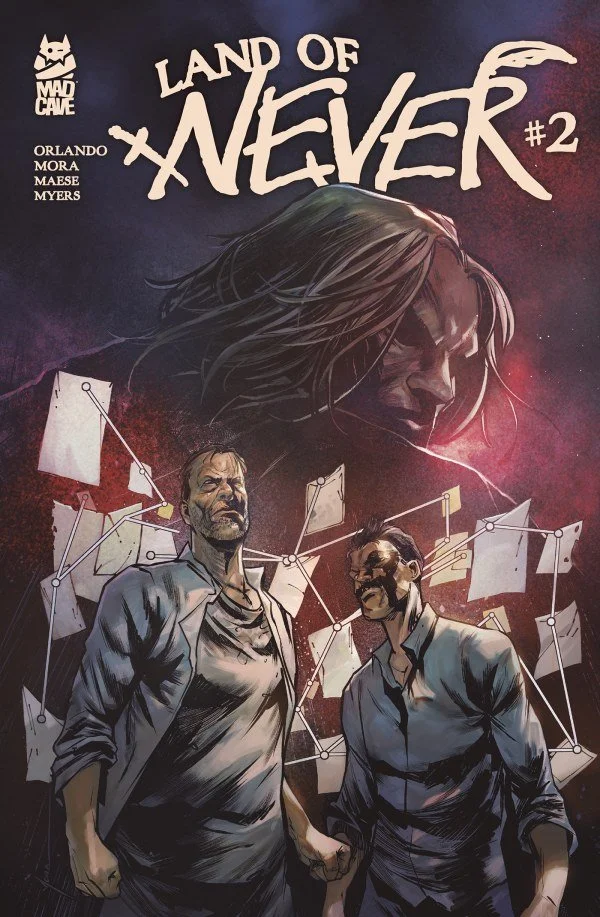
Credit: Mad Cave Studios
*** POSSIBLE SPOILER WARNING ***
STORY OVERVIEW:
We flashback to up to five months ago where Wendy finds herself in a cage trapped by the Floating Man. As he comes and goes, he reveals that he wants her to stop being like them and start accepting that she is where she needs to be in a world where they make up their own rules. She is still defiant and is definitely not buying into what he is selling. During these flashbacks she discovers she is not alone and there is a little boy named Rufus there. She starts to build a friendship with Rufus, and he reveals to her what he knows including that their “big brother” is named Peter. Unlike Wendy, Rufus roams the area freely and is not in a cage and she is trying to figure out how to use that to her advantage. Meanwhile, her dad Jim Hoke and Rufus’ dad Casey are still following leads and trying to find their kids. This leads them to a house that caught the Floating Man on their ring doorbell. Will this get them one step closer to finding their kids or are they just wasting time?
WRITING:
This issue does an excellent job of building on the groundwork laid down in the first issue while also pushing the larger mystery forward in a meaningful way. Steve Orlando balances two very different sides of the story without letting either one overpower the other. On one side, the flashbacks fill in the missing pieces of Wendy and Rufus’ time in captivity, showing how their strange new reality has taken shape over the course of five months. On the other side, the present-day search by their fathers keeps the story grounded in grief, panic, and determination. That contrast gives the issue a strong rhythm, moving between the eerie, almost dreamlike horror of “Never-Neverland” and the painful realism of parents refusing to give up on their children.
The flashback structure is one of the strongest parts of the writing because it allows the reader to learn what happened to Wendy without stopping the momentum of the issue. Instead of dumping information all at once, Orlando reveals details through Wendy’s fear, confusion, and growing awareness of her surroundings. The Floating Man’s dialogue remains unsettling because he speaks with a warped sense of logic, acting as if Wendy simply needs to accept the rules of this place. That makes the captivity scenes feel even more disturbing, because the danger is not only physical but psychological. Wendy is not just being held prisoner; she is being pressured to accept a twisted version of family, childhood, and belonging.
Rufus adds an important emotional layer to these scenes. His presence gives Wendy someone to protect, question, and connect with, but it also shows how long this nightmare has been shaping the children trapped inside it. The idea that Rufus can move around more freely while Wendy remains caged creates tension because it gives Wendy a possible advantage, but it also makes the reader wonder what Rufus has already been forced to accept. The mention of Peter as their “big brother” deepens the connection to Peter Pan without making the issue feel like a simple retelling. Instead, Orlando twists familiar pieces of that mythology into something darker, where Neverland becomes less like an escape from growing up and more like a place where innocence is stolen and rewritten.
The present-day material with Jim Hoke and Casey works just as well because it keeps the horror from feeling too distant or fantastical. Their search brings a believable urgency to the issue, especially as they continue chasing leads even when the police appear ready to move on. Those scenes capture the helplessness of parents who know something is wrong but keep running into dead ends, dismissals, and people who may not understand the full danger. The encounter connected to the doorbell footage is a strong example of how Orlando lets a clue feel both promising and frustrating at the same time. It gives the fathers a reason to keep moving, but it also reminds the reader that every answer may lead to another obstacle. By the end of the issue, the writing succeeds because it deepens the mystery, strengthens the emotional stakes, and makes the connection between the children’s nightmare and the fathers’ investigation feel tighter than before.
ARTWORK:
The artwork in this issue matches the story extremely well and plays a major role in building the uneasy atmosphere that makes the book work. Miguel Mora gives “Never-Neverland” a strange, unsettling quality where everything feels familiar enough to recognize but distorted enough to feel dangerous. That balance is important because the story is pulling from imagery connected to childhood fantasy, but the visuals make it clear that this is not a safe or magical escape. The environments feel shadowy, closed-in, and unpredictable, which helps sell Wendy’s confusion and fear as she tries to understand the rules of the place she has been taken to.
Mora’s character work is especially strong because the emotions are clear without needing the script to over-explain them. Wendy’s expressions carry a lot of the issue’s tension, shifting between fear, anger, suspicion, and determination as she tries to make sense of what is happening around her. Rufus has a different kind of presence, one that feels quieter and more worn down, which helps suggest that he has been trapped in this world long enough to understand parts of it that Wendy does not. Peter stands out visually because he feels both connected to the fantasy source material and completely wrong at the same time. The design has a menacing quality that makes him memorable, but he is not overdesigned to the point where he loses his creepiness.
The colors from Fares Maese add another strong layer to the book’s mood. The palette helps separate the grounded real-world investigation from the more surreal and threatening atmosphere of “Never-Neverland”. The darker tones and strange lighting make the fantasy elements feel corrupted, while the more realistic scenes with Jim Hoke and Casey keep the story connected to the emotional pain of the missing children. That contrast gives the issue a strong visual rhythm, moving between the nightmare Wendy is trapped in and the desperate search happening outside of it.
Micah Myers also deserves credit for lettering that keeps the issue moving smoothly. The dialogue-heavy scenes are easy to follow, and the lettering never gets in the way of the artwork or the tension. That matters in an issue like this because so much of the horror comes from pauses, reactions, and the strange way certain characters speak. The art team as a whole does a fantastic job of making the world feel dangerous, emotional, and mysterious all at once. The visuals do not just illustrate the script; they deepen the tone of the issue and make the reader feel the same uncertainty Wendy is feeling. By the end, the artwork leaves a strong impression and makes the next issue feel even more exciting because the world already feels rich, creepy, and full of unsettling possibilities.
Check Out My Review of LAND OF NEVER #1
Final Thoughts:
Land of Never #2 does an excellent job of building on the initial story from issue one. Showing us, what Wendy and Rufus are going through in this messed up version of “Neverland”, while building up tension and suspense with the fathers’ search for them at the same time makes the pacing of this story impeccable. This story draws readers in with intrigue and keeps them hooked with the promise of even more reveals. As this world opens up more and the story unfolds, I think that readers will continue to come away with a satisfying horror adventure. Make sure to pick up a copy of this issue along with issue one at your LCS and buckle in for a wildly mysterious ride.
FINAL GRADE: 9/10
Let me know your thoughts on Land of Never #2 in the comments below. Thanks for reading!