HAMMER HEAD #1 (Mad Cave Studios)
To say Jules has been through some stuff would be an understatement. The only survivor of a serial killer who murdered everyone in the small town she is from, has caused her to become a drug addict just to cope. But when she is arrested and placed in what appears to be a prison you would think maybe her life would become at least easier. Unfortunately for her and the small group of inmates at the facility their nightmare is only about to begin.
Hammer Head #1 – Written By Ed Brisson – Art By Damian Couceiro – Colors By Dee Cunniffe - Letters By Pat Brosseau - Edited By Jon Moisan - Published By Mad Cave Studios
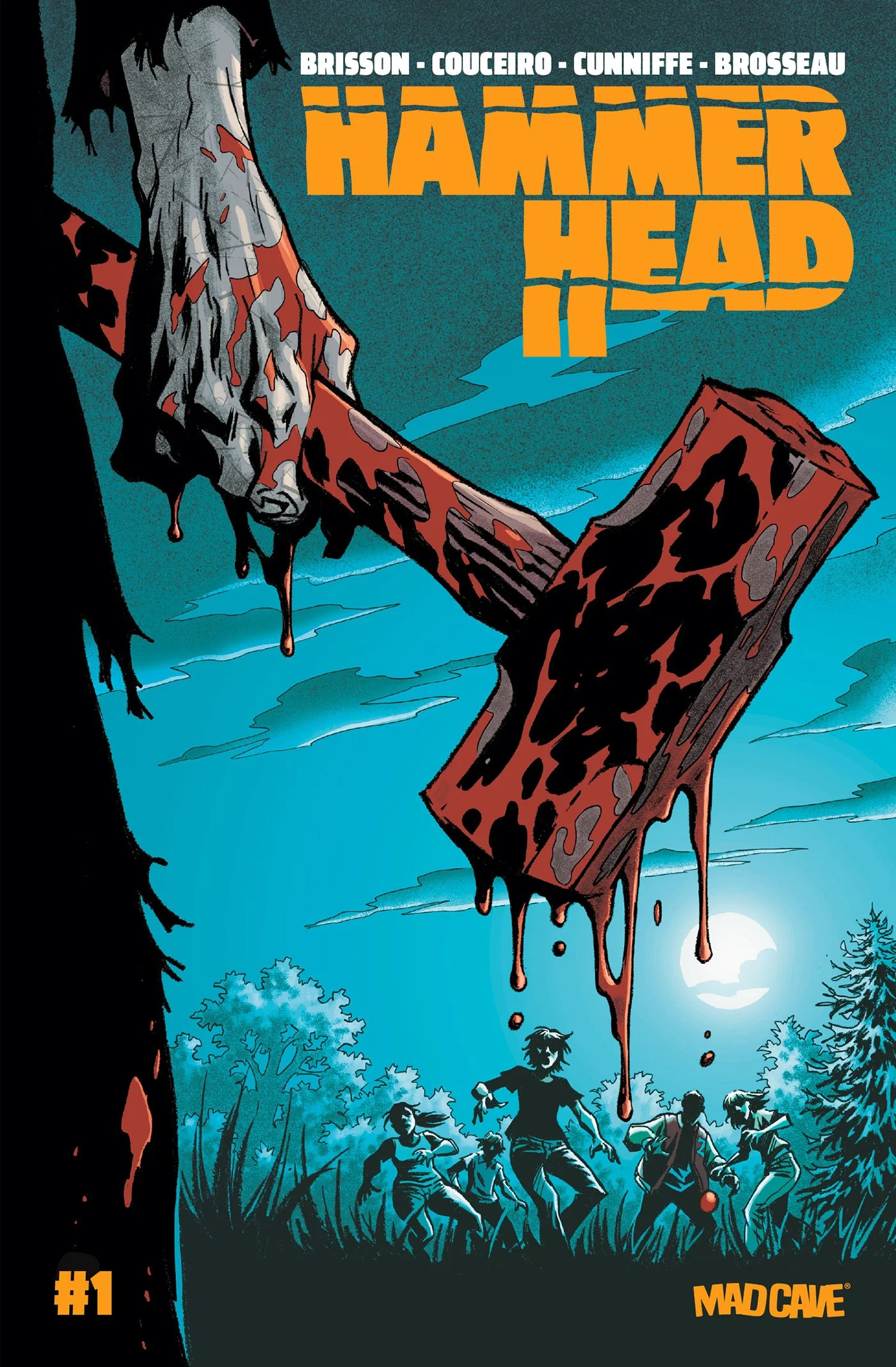
Credit: Mad Cave Studios
*** POSSIBLE SPOILER WARNING ***
WRITING:
This first issue introduces readers to its unsettling world with admirable restraint, revealing just enough information to establish the central conflict while allowing the larger mystery to expand around it. Ed Brisson quickly makes Jules the emotional center of the story. Her history as the sole survivor of a serial killer’s attack, her struggle with addiction, and her current confinement all communicate how thoroughly trauma has shaped her life. Rather than presenting these details as simple exposition, Brisson allows them to influence the way Jules responds to authority, uncertainty, and the people around her. She feels guarded and damaged, but never reduced to those qualities. As the issue unfolds and additional pieces of her past come into focus, the reader’s sympathy deepens because her pain feels connected to every decision she makes. That emotional investment is essential to the story’s success: the more readers care about whether Jules can regain control of her life, the more frightening each new threat becomes. By grounding the horror in a vulnerable but compelling protagonist, Brisson gives the series a strong human foundation and ensures that the suspense carries genuine emotional consequences.
Brisson also does an excellent job of surrounding the story with uncertainty. He withholds key explanations about the facility, the people running it, and the true reason Jules and the other inmates have been brought together, giving readers enough clues to form theories without confirming any one interpretation. That careful control of information creates a constant sense that something is wrong even during the issue’s quieter conversations. Small details, uneasy interactions, and unanswered questions gradually accumulate, turning the setting itself into a source of tension. The deliberate pacing is especially effective because Brisson does not rush toward the horror. He first establishes the characters, their confinement, and the fragile routines of the facility, allowing suspense to build beneath the surface. When the situation finally erupts in the closing pages, the sudden violence and larger horror reveal feel more powerful because they shatter the uneasy calm that came before them.
The ending does more than deliver shock value; it reframes earlier moments, raises urgent questions about what is really happening, and makes the danger facing Jules and the other inmates feel immediate. By balancing intimate human drama with a steadily escalating threat, the issue functions as both a character-driven introduction and an effective horror hook. It leaves readers invested in Jules, disturbed by the forces surrounding her, and eager to discover how far the nightmare will spread as the series continues.
ARTWORK:
The artwork in this first issue captures the misery of Jules’ life and the severity of her situation with unflinching visual clarity. Damian Couceiro gives her world a worn, oppressive quality, using detailed environments and expressive character work to make every location feel like an extension of her despair. Jules’ posture, gaunt appearance, and exhausted expressions communicate the physical toll of addiction before the dialogue needs to explain it. Even her sudden bursts of violence appear rooted more in panic and desperation than rage, which keeps the reader focused on her vulnerability rather than treating those moments as simple action. Couceiro also creates a striking contrast between Jules’ unstable home life and the controlled environment of the facility. Her surroundings outside are so bleak and inhospitable that the institution initially appears almost safer, even though its sterile spaces and rigid order quickly suggest a different kind of danger. His character designs give the other inmates distinct appearances and recognizable body language, allowing each person to make an immediate impression and helping the group feel believable rather than interchangeable. This careful attention to expression, setting, and physical detail builds empathy for the characters while quietly preparing the reader for the final pages, when the restrained realism gives way to a much more explicit and disturbing vision of horror.
Dee Cunniffe’s color choices reinforce the despair running through the story and give the issue a consistent emotional atmosphere. Muted grays, cold blues, and other drained hues dominate the pages, making Jules’ world feel exhausted, joyless, and almost devoid of warmth. The similarity between the coloring of her home and the facility is especially effective. Although the locations are physically different, the shared palette suggests that Jules is not truly escaping her circumstances; she is simply moving from one oppressive environment into another. Her life remains consumed by gray, and the absence of vivid color visually reflects how little hope or control she believes she has. When Jules meets the other inmates, the pages brighten slightly and the palette becomes a touch less severe. That subtle shift creates a brief sense of relief, as though companionship might offer her a path toward stability or safety. However, the change is deliberately restrained, preventing the scene from ever feeling completely secure. Cunniffe uses that temporary warmth as visual misdirection, encouraging the reader to lower their guard before the story turns toward its final horror. As the threat emerges, the contrast makes the darker imagery feel even more abrupt and unsettling, proving that the colors are not merely decorative but essential to the issue’s pacing, mood, and emotional storytelling.
Pat Brosseau’s lettering plays an important role in controlling the tension and guiding the reader through the issue. The dialogue is presented with enough variation in emphasis and rhythm to support the emotions visible in the artwork, making fear, hesitation, anger, and exhaustion easy to recognize without overwhelming the performances on the page. The placement of the balloons keeps conversations clear during quieter scenes while also maintaining the intended reading order when the action becomes more frantic. Brosseau’s sound effects are integrated naturally into Couceiro’s compositions, adding impact to moments of violence without covering important visual details or distracting from the characters. Their size, shape, and positioning help distinguish sudden bursts of movement from the story’s slower, more uneasy passages, strengthening the contrast between suspense and release. This clarity becomes particularly valuable during the final reveal, when the page must communicate new visual information quickly while preserving the shock of the moment. Together, Couceiro, Cunniffe, and Brosseau create a unified presentation in which linework, color, and lettering support the same oppressive tone. The result is an art team working in close harmony, bringing the story to life with enough precision that the reader can understand the action, emotional stakes, and changing mood without unnecessary explanation.
CHECK OUT MY REVIEW OF THE OMEGA BOOK #1
Final Thoughts:
Hammer Head #1 is a gripping debut that blends emotional character work with slow-building horror. Ed Brisson’s tense storytelling and the art team’s bleak, atmospheric visuals make Jules’ nightmare immediately compelling while leaving enough unanswered questions to demand the reader pick up issue two. Horror fans should add this promising new series to their Pull List immediately.
FINAL GRADE: 9.6/10
Let me know your thoughts on Hammer Head #1 in the comments below. Thanks for reading!