DINNER DATE #1 (IGNITION PRESS)
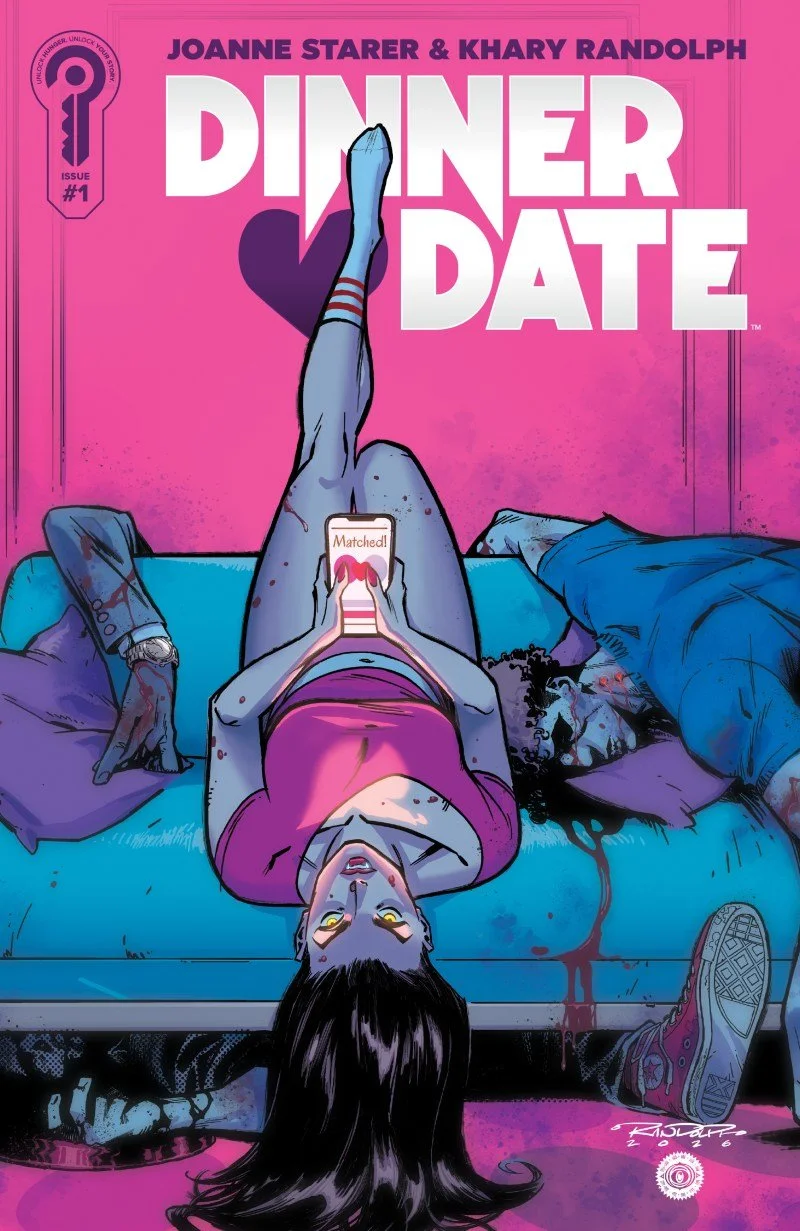
Dating is such a daunting task and can drive anyone to want to kill. But for Syd it’s especially difficult and hard to navigate. You see she likes to pick the wrong ones and then makes some very interesting mistakes. One of these mistakes happens on a night where she needs to get a ride from a rideshare service. Her she meets Izzy, a driver who has had a night full of creepers and jerks in her car. But Syd seems to be cool and very attractive to Izzy. Unfortunately for Izzy, Syd had gotten hungry earlier and her leftovers are making a comeback. Can Izzy handle the reveal of what lust truly drives Syd?
Dinner Date #1 – Written By Joanne Starer – Art By Khary Randolph – Colors By Emilio Lopez – Letters By Andworld Design – Edited By Jamie S. Rich - Published By Ignition Press
Credit: Ignition Press
*** POSSIBLE SPOILER WARNING ***
WRITING:
This is an incredible and highly inventive first issue, one that immediately establishes a distinct voice while carefully guiding readers toward a series of increasingly surprising revelations. Joanne Starer layers the story with confidence, using misdirection, character development, and dark humor to ensure that the opening pages are engaging without revealing too much too quickly. The introduction centers on Izzy and the exhausting realities of working as a rideshare driver, including the uncomfortable passengers, unpredictable encounters, and constant tension that come with allowing strangers into her car. Because so much attention is initially placed on her perspective, it is easy to assume that Izzy will be the central figure. However, once she picks up Syd, the focus begins to shift in a way that feels natural rather than abrupt. As the ride continues, Starer gradually reveals more about Syd’s personality, her romantic history, and the poor decisions that have shaped her evening. These details make her feel relatable and vulnerable, allowing readers to form an emotional connection with her before fully understanding what she is capable of. Izzy’s apparent attraction to Syd adds another layer to the interaction, creating playful chemistry and briefly suggesting that the story may develop into an unconventional romance between two strangers. Starer then overturns those expectations by introducing murder and the disposal of a body, sharply transforming the tone without losing the humor or momentum established earlier. The twist is startling, but it also feels carefully prepared by the uneasy details scattered throughout the conversation. By the end of this sequence, readers have already experienced comedy, romance, suspense, and horror, yet the issue is still withholding its biggest revelation.
From there, Starer moves backward through the events that led Syd to need the ride, giving the issue a fuller emotional and narrative context. The story explores more of Syd’s romantic history and the repeated mistakes she has made while searching for connection, showing that her problems are not limited to one disastrous evening. This builds toward a date arranged through a dating app, a familiar modern setup that allows Starer to play with recognizable anxieties surrounding first impressions, awkward conversation, mismatched expectations, and the uncertainty of meeting someone who may not be what they initially seemed. These details strengthen the sense of familiarity around Syd and make her frustrations easy to understand, even as the earlier body-disposal sequence reminds readers that something far more dangerous is waiting beneath the surface. The structure creates an effective form of dramatic irony: readers already know the date will end badly, but they do not yet know exactly how or why. That knowledge adds tension to every uncomfortable exchange while also allowing the humor of the situation to land. Syd’s date quickly proves himself to be arrogant, inconsiderate, and painfully self-involved, embodying nearly every recognizable bad-date trait. His behavior steadily raises the audience’s frustration and makes the eventual turn feel both shocking and darkly satisfying. When Syd becomes hungry, the story shifts from social discomfort to outright horror, and her date discovers that she is far from an ordinary woman. The reveal that Syd is a vampire is staged with excellent timing, recontextualizing her comments, her behavior, and the body seen earlier in the issue. Rather than functioning as a twist included only for shock value, the revelation brings the entire narrative together and rewards the patient buildup. Starer’s control of pacing makes the moment worth the wait, while the blend of romantic comedy, character drama, and supernatural horror gives the issue a memorable identity and leaves plenty of room for Syd’s story to become even more complicated.
ARTWORK:
The artwork in this first issue is crisp, clean, and immediately accessible, giving every page a polished visual identity. Khary Randolph frames the story with the energetic look and inviting atmosphere of a romantic comedy, which makes the darker supernatural elements even more surprising when they finally emerge. The city streets, restaurants, sidewalks, and glowing storefronts feel familiar enough to resemble a believable night in any major city, grounding the story in an ordinary public environment filled with traffic, pedestrians, and late-night activity. That normality is essential to the tension because Syd’s secret exists in plain sight, surrounded by people who have no idea what is happening only a short distance away. Randolph also makes strong use of the rideshare car as both a setting and a storytelling device. Although much of the narrative unfolds inside the vehicle, the passing streets, changing backgrounds, and shifting views through the windows prevent the issue from feeling visually confined. The car becomes a moving stage where Izzy and Syd can talk, flirt, and cautiously evaluate one another while the enormous city continues around them. This contrast between an intimate conversation and a vast urban landscape gives the issue a strong sense of scale and movement, making the world feel much larger than the limited physical space occupied by the characters.
The character designs are stylish, expressive, and infused with a noticeable anime influence, particularly in the sharp silhouettes, animated facial expressions, and dynamic body language. Randolph gives Izzy, Syd, and Maya distinct visual identities, making each character recognizable even before the dialogue establishes their personality. Izzy’s design balances toughness with an approachable, nerdy charm. Her tattoos, graphic T-shirt, confident posture, and more guarded expressions suggest that she is capable of protecting herself, while her reactions to Syd reveal a warmer and more playful side. Maya has a looser, more adventurous appearance. Her relaxed clothing and carefree presentation complement her spontaneous energy, allowing her personality to register visually the moment she appears. Syd receives the strongest and most carefully layered design. At first, her soft features, fashionable appearance, and unassuming demeanor make her seem innocent, vulnerable, and perhaps overwhelmed by a terrible date. That visual softness encourages both Izzy and the reader to underestimate her. When Syd’s hidden nature is finally revealed, Randolph transforms those familiar features into something predatory and frightening. Her expressions become sharper, her posture more aggressive, and the contrast with her earlier appearance makes the change feel especially menacing. The transformation works because it does not abandon the original design; instead, it exposes the danger that was concealed within it. Randolph’s character work therefore does more than make the cast look appealing. It communicates personality, supports the story’s misdirection, and helps establish the shifting tone between romance, comedy, and horror.
Emilio Lopez’s color choices accentuate Randolph’s linework and give the issue a vivid personality of its own. Although most of the story takes place at night, the pages never become visually dull, muddy, or overwhelmed by darkness. Instead, Lopez fills the city with warm interior lighting, colorful street reflections, and saturated neon signs that cast pinks, purples, blues, and yellows across the environments and characters. Those illuminated colors create the inviting atmosphere of a lively night out while also making the setting feel slightly heightened and unpredictable. The neon appears to bleed from one surface to another, reflecting across windows, car interiors, clothing, and skin, which helps connect the characters to the city around them. Lopez also uses shifts in temperature and intensity to guide the reader through the issue’s changing moods. Softer, warmer tones support the flirtation and humor between Izzy and Syd, while harsher contrasts and deeper shadows make the violent and supernatural moments feel more dangerous. The colors consistently direct attention toward important expressions, gestures, and reveals without overpowering the artwork. As a result, the palette does more than make the pages attractive; it strengthens the storytelling, clarifies the emotional rhythm of each scene, and creates a memorable visual bridge between romantic comedy and horror.
Check Out MY REVIEW OF THE FOLK OF DOONEY HOLLOW #1
Final Thoughts:
Dinner Date #1 is a sharp, stylish debut that blends romantic comedy, urban horror, and clever misdirection with ease. Joanne Starer’s engaging characters and well-timed vampire reveal pair perfectly with Khary Randolph and Emilio Lopez’s expressive, neon-soaked artwork. Funny, surprising, and visually distinctive, this first issue leaves a strong impression and plenty of reasons to return for the next date. Grab a copy at the shop this week and sink your teeth into this fun and awesome story. I promise once you’re bitten, you’ll definitely come back for more.
FINAL GRADE: 9.5/10
Let me know your thoughts on Dinner Date #1 in the comments below. Thanks for reading!