SEVEN WIVES #2 (IDW CRIME)
Detectives Aguilar and Halwell are continuing to unravel the mystery surrounding the murder of the religious zealot and cult leader Matthew Dunn. As they dig more into his involvement as a leader of an FLDS family, they discover that not all was well with him and his seven wives. But do these new revelations shine any more light on who murdered Matthew Dunn?
Seven Wives #2 - Written By Zoe Tunnell – Art By Tesslyn Bergin-Dicoi – Colors By Antonio Del Hoyo - Letters By Brian Kolek – Edited By Riley Farmer - Published By IDW Publishing
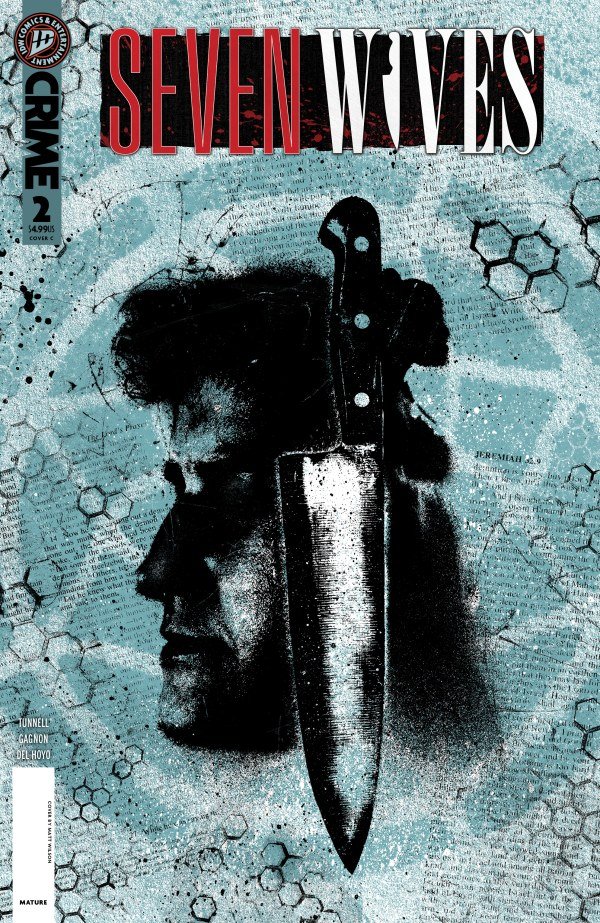
Credit: IDW Crime
***POSSIBLE SPOILER WARNING***
STORY OVERVIEW:
As Detectives Aguilar and Halwell start to go over what they have found out so far about the murder of Matthew Dunn. They realize they need to return and ask more questions to more of the wives. They start by questioning his last wife Mary, who is just 18 years old and 8 months pregnant with Matthew’s child. She doesn’t give them much in the way of who killed him but points them in the direction of his second wife Galilee. The detectives go and find Galilee in the forest, where Olivia finds out that she actually knows her, or at least who she was before she joined the FLDS church. Galilee let’s them know that this is bigger than just the Dunn family and it is a conspiracy that comes down from the higher ups of the FLDS church. She also puts them on the trail of a secret that will surely change how everyone looks at Matthew Dunn.
WRITING:
This issue takes what readers thought they understood about Matthew Dunn’s murder and steadily turns it upside down. Zoe Tunnell captures the true-crime investigation style of this story, letting each interview and discovery pull the detectives—and the reader—deeper into the uglier reality behind Dunn’s public image. What initially appears to be a contained murder mystery inside one fractured family begins to widen into something much more disturbing, with the FLDS church itself casting a long shadow over the case. The more Aguilar and Halwell learn, the clearer it becomes that Matthew was not simply a harsh or controlling patriarch, but someone whose secrets and abuses may have created enemies in every corner of his household and beyond.
Tunnell is especially effective in the way she layers the revelations. Mary’s age, her pregnancy, and the details surrounding her wedding night are already horrifying, but the issue does not stop there. Instead, those moments become part of a larger pattern that makes Matthew and the institution around him seem increasingly predatory. By the time the final reveal lands, the earlier information feels less like a single shocking detail and more like evidence of a much bigger system of manipulation and concealment. That slow escalation gives the issue a strong sense of momentum, because every new answer creates another uncomfortable question.
Galilee is also used very well in this issue. She is not just another witness who points the detectives toward the next clue; she becomes one of the most important emotional and narrative pieces of the story. Her connection to Detective Olivia Aguilar adds a personal weight to the investigation and gives Olivia more depth beyond the procedural side of the case. Seeing that Aguilar has a history, or at least a connection, to who Galilee was before joining the church makes the mystery feel more intimate. It suggests that this case is not only about solving Matthew’s murder, but also about confronting the damage left behind by a community that has taken pieces of people’s lives from them.
With only one issue left, Tunnell does a great job of setting the table for a tense and potentially explosive conclusion. The mystery still has plenty of unanswered questions, but this chapter gives the story a sharper sense of direction and raises the emotional stakes in a meaningful way. The writing keeps the reader invested not just in who killed Matthew Dunn, but in why so many people may have wanted him dead. That combination of character drama, religious corruption, and murder mystery makes this second issue feel bigger, darker, and more compelling than the first.
ARTWORK:
The artwork in this issue looks great and does a strong job capturing the uneasy atmosphere that the story needs. Tesslyn Bergin-Dicoi’s character work helps sell the tension in the investigation, especially in the quieter scenes where the detectives are questioning the wives and trying to read what is being said versus what is being hidden. The expressions and body language give those conversations a guarded, uncomfortable feeling, which fits perfectly with a story built around secrets, fear, and control. The characters all feel connected to the same isolated world, but each one still carries enough personality and visual distinction to stand out.
The setting is one of the strongest parts of the visual storytelling. The art team makes the compound and the surrounding area feel dry, remote, and closed off from the rest of the world. That sense of isolation adds a lot to the tone of the issue because it makes the reader feel like Aguilar and Halwell are stepping into a place where the usual rules do not fully apply. The backgrounds do not need to be overly flashy to be effective; instead, they create a grounded environment that feels lived in, restrictive, and quietly threatening. That claustrophobic feeling helps reinforce the idea that the wives are trapped not only by the physical location, but also by the power structure surrounding them.
Antonio Del Hoyo’s colors add another important layer to the book’s mood. The more natural tones of the present-day scenes help ground the investigation, while the stronger use of reds in the flashbacks gives those moments a harsher and more unsettling quality. That color choice makes the flashbacks feel emotionally charged, almost like the past is bleeding into the present. It also gives the issue a visual rhythm, separating memory and revelation from the detectives’ search for answers without making the transitions feel confusing. The colors help guide the reader through the story while also deepening the sense of danger beneath every new discovery.
Overall, the artwork strengthens the whodunit atmosphere by making the mystery feel tense, personal, and oppressive. The visuals do not just illustrate the script; they help build the emotional pressure behind it. Between the expressive character work, the isolated setting, and the moody color palette, the art makes the world of Seven Wives feel uncomfortable in the best possible way. It pulls the reader deeper into the investigation and makes the secrets surrounding Matthew Dunn feel even darker.
CHECK OUT MY REVIEW OF SEVEN WIVES #1
Final Thoughts:
Seven Wives #2 adds more mystery, while also unveiling more disturbing revelations. The more this story unravels the darker and dirtier Matthew Dunn becomes. This really puts the reader at a unique crossroads where you almost feel that Dunn got what he deserved and may have even gotten off lightly. The mystery of who killed him is taking a backseat to the crimes that Dunn has committed. With only one issue left, this story can go many ways and will surely be an exciting finish no matter which way is chosen. If you like crime stories this is the series for you. Grab a copy of issue 2 at the LCS this week and pick up issue 1 on Neon Ichiban to get caught up before the final issue.
FINAL GRADE: 9.2/10
Let me know your thoughts on Seven Wives #2 in the comments below. Thanks for reading!