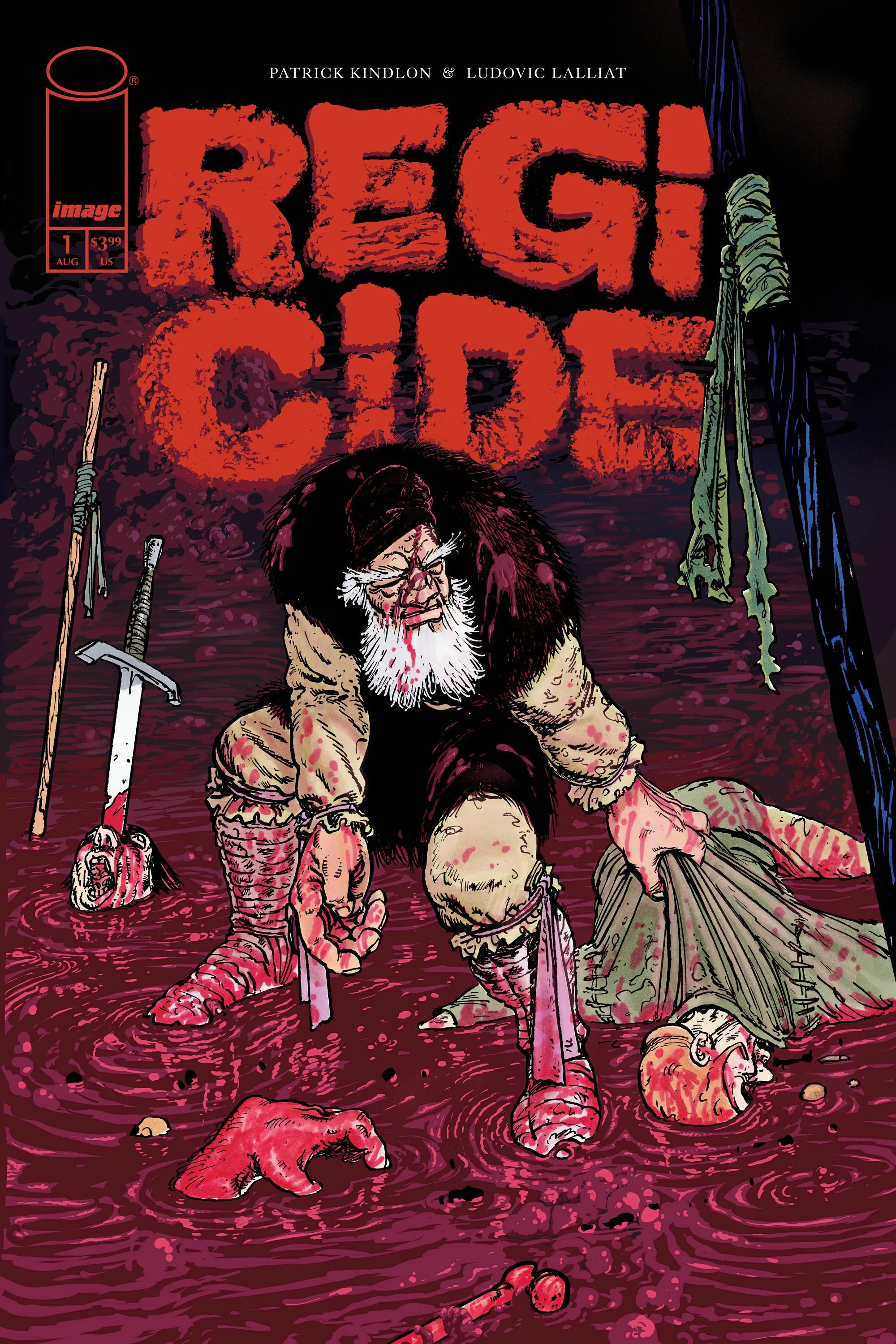
REGICIDE #1 (IMAGE COMICS)
Welcome to the Dark Ages where common folk do their jobs, well nobility flourishes. Well that normally is the story, that’s of course unless you find yourself in Transylvania. A village of mostly farmers is visited by a mysterious masked man who is looking for some help on a mission. The village offers him their strongest man and then the two set off. But what is the mission, and what things will these men encounter?
Regicide #1 – Written By Patrick Kindlon – Art By Ludovic Lalliat – Edited By James Hepplewhite - Published By Image Comics
Credit: Image Comics
*** POSSIBLE SPOILER WARNING ***
STORY OVERVIEW:
It’s a peaceful day in the Transylvanian countryside and in the quite village of Tara Rumâneascâ all that is stirring is the farmers in the field. Suddenly a masked man named Doru arrives in the village and is looking for a companion to go on a mission with him. After filling in the Village Elders, they chose Mihas for this important mission. The reason they have chosen Mihas is because he’s the strongest in the village, even killing a bear with his bare hands before. As Doru and Mihas leave the village, Doru lets Mihas know what the mission is. They are on their way to dethrone the Voivode, Basarab. However, this will be no normal journey and the things that Mihas is about to see and do will change his whole outlook on the world.
WRITING:
This first issue gives the reader just enough information to understand the direction of the story while still holding back the larger truths of this world. Patrick Kindlon does a strong job establishing Regicide as a fantasy story built around mystery, violence, folklore, and political unrest. The opening in Tara Rumâneascâ immediately grounds the book in a small, lived-in village where the farmers and elders seem used to the hard realities of the era. That quiet introduction makes Doru’s arrival feel even more important. A masked stranger riding into town and requesting help from the village elders is a simple setup, but Kindlon uses it well because the reader instantly understands that this man carries secrets, danger, and a much larger purpose with him.
The decision to pair Doru with Mihas gives the issue a strong dramatic center. Mihas is introduced through reputation before the reader fully gets to know him, and the detail about him killing a bear with his bare hands immediately tells us what kind of physical force he brings to the mission. However, Kindlon does not write him as just a brute. There is a sense that Mihas is stepping into something he does not completely understand, which makes him a great point-of-view figure for the reader. Through him, the strange pieces of the world begin to reveal themselves one at a time. His strength may make him useful, but his lack of experience with the wider horrors outside the village makes the journey feel dangerous and unpredictable.
What works best about the writing is how patiently Kindlon reveals the scope of the story. At first, the mission sounds like a direct attempt to overthrow or assassinate a corrupt ruler, Voivode Basarab. That alone would be enough to drive a dark medieval adventure, but the issue quickly suggests that the political conflict is only one layer of something much stranger. The first encounter with opposition already feels slightly wrong, and the way Mihas responds to the threat shows the reader both his usefulness and the brutality of the world he has entered. The violence is not just included for shock value; it helps define the tone of the series and makes it clear that this is a dangerous place where myths, monsters, and human cruelty may all exist side by side.
Kindlon also keeps the dialogue and exposition moving at a good pace. The issue explains enough about Doru, Mihas, and the larger goal without stopping the story for long explanations. There is still a heavy shroud of mystery around Doru, Basarab, and the true nature of the mission, but that mystery feels intentional rather than confusing. The reader is meant to feel like Mihas: pulled along by someone who knows far more than he is willing to say. That tension creates a strong hook, because every new scene promises another clue about what kind of world this really is and what kind of threat Basarab may actually represent.
The arrival at Lulia’s house is where the issue fully separates itself from a straightforward medieval revenge or rebellion story. That moment makes it clear that Regicide #1 is interested in surprising the reader and expanding the rules of its world as the journey continues. Kindlon uses that reveal to widen the reader’s expectations, showing that this story can shift from grounded village drama to brutal action to something much weirder and more supernatural without losing its focus. By the end of the issue, the reader has a strong sense of the mission’s immediate purpose, but also enough unanswered questions to want the next issue. As a first issue, the writing succeeds because it builds intrigue, gives the two central characters a compelling dynamic, and promises a larger fantasy world full of secrets, violence, and unsettling surprises.
ARTWORK:
The artwork in this first issue is one of the biggest reasons Regicide #1 stands out. Ludovic Lalliat gives the book a visual identity that feels eerie, ancient, and strangely beautiful all at once. His style does not look like a standard medieval fantasy comic, and that works in the issue’s favor. The figures, environments, and creatures all have a rough, dreamlike quality that makes the world feel both grounded in history and touched by something unnatural. From the very beginning, the art helps sell the idea that this is not just a story about kings, villages, and warriors, but a darker world where folklore and horror are always close by.
The landscapes are especially impressive because they immediately establish mood. Tara Rumâneascâ feels quiet, isolated, and worn down by time, which makes it the perfect place for Doru’s strange arrival. The open fields and rural scenery have a haunting stillness to them, almost like the world is holding its breath before something terrible happens. Lalliat’s backgrounds give the setting a strong sense of place without making the pages feel overcrowded. There is enough detail to make the village and countryside feel real, but the shapes and atmosphere also carry a surreal edge that makes the world feel slightly off balance.
The character designs also add a lot to the issue. Doru’s masked appearance instantly makes him fascinating because he looks like someone who belongs to a legend or nightmare more than an ordinary village road. The mask gives him mystery before he even says much, and it makes the reader question how much of himself he is hiding. Mihas, on the other hand, has the physical presence needed for someone known as the strongest man in the village. He looks powerful and imposing, but the art also allows him to seem uncertain when the mission begins to move beyond anything he expected. That contrast helps the characters feel more expressive and more human.
When the story moves into violence and monster imagery, Lalliat’s art becomes even more effective. The action has a brutal impact, but it is not drawn in a clean or polished way. Instead, the violence feels raw, messy, and almost ritualistic, which matches the darker tone of the story. The monsters and stranger visual elements are unsettling because they do not feel completely separated from the world around them. They look like they belong in this strange version of the Dark Ages, as if the supernatural has always been hiding just outside the village roads. That makes the horror feel more natural and more disturbing.
The color work is also important to the overall effect of the book. The earthy tones help ground the story in a harsh rural setting, while the more surreal choices give certain scenes an almost painted, expressionistic feeling. The comparison to Edvard Munch’s The Scream fits because there is a similar sense of anxiety and distortion in the way the world is presented. The colors do not just make the pages look attractive; they help create unease. They make the landscapes feel lonely, the characters feel haunted, and the strange moments feel even more memorable. Overall, the artwork strengthens every part of the issue by giving Regicide #1 a look that is beautiful, disturbing, and completely its own.
CHECK OUT MY REVIEW OF D’ORC #6
Final Thoughts:
Regicide #1 is a strong opening issue that blends dark fantasy, political intrigue, folklore, and horror into a story that immediately feels unique. Patrick Kindlon builds an intriguing world around Doru and Mihas, while Ludovic Lalliat’s eerie artwork gives the book a haunting visual identity. With a compelling mission, memorable atmosphere, and plenty of mystery left to uncover, this debut makes a strong case for following the series into its next issue and beyond.
FINAL GRADE: 9.5/10
Let me know your thoughts on Regicide #1 in the comments below. Thanks for reading!