ONLY THE SAVAGE ARE LEFT #2 (Dark horse comics)
A whole terrifying new world with a new set of barbaric rules. This is the world Ryder finally finds himself thrust into as he tries to save Oaklynn. Thankfully he is not alone as Oaklynn’s dad Fionn is also with him. However, this poses its own set of problems as Fionn is used to this world whereas Ryder has been mostly protected from it. Will Ryder be able to adapt and accept the new violent way of life?
Only The Savage Are Left #2 - Written By Zack Kaplan – Art By Stefano Raffaele - Colors By Thiago Rocha – Letters By Hassan Otsmane-Elhaou - Edited By Spencer Cushing - Published By Dark Horse Comics
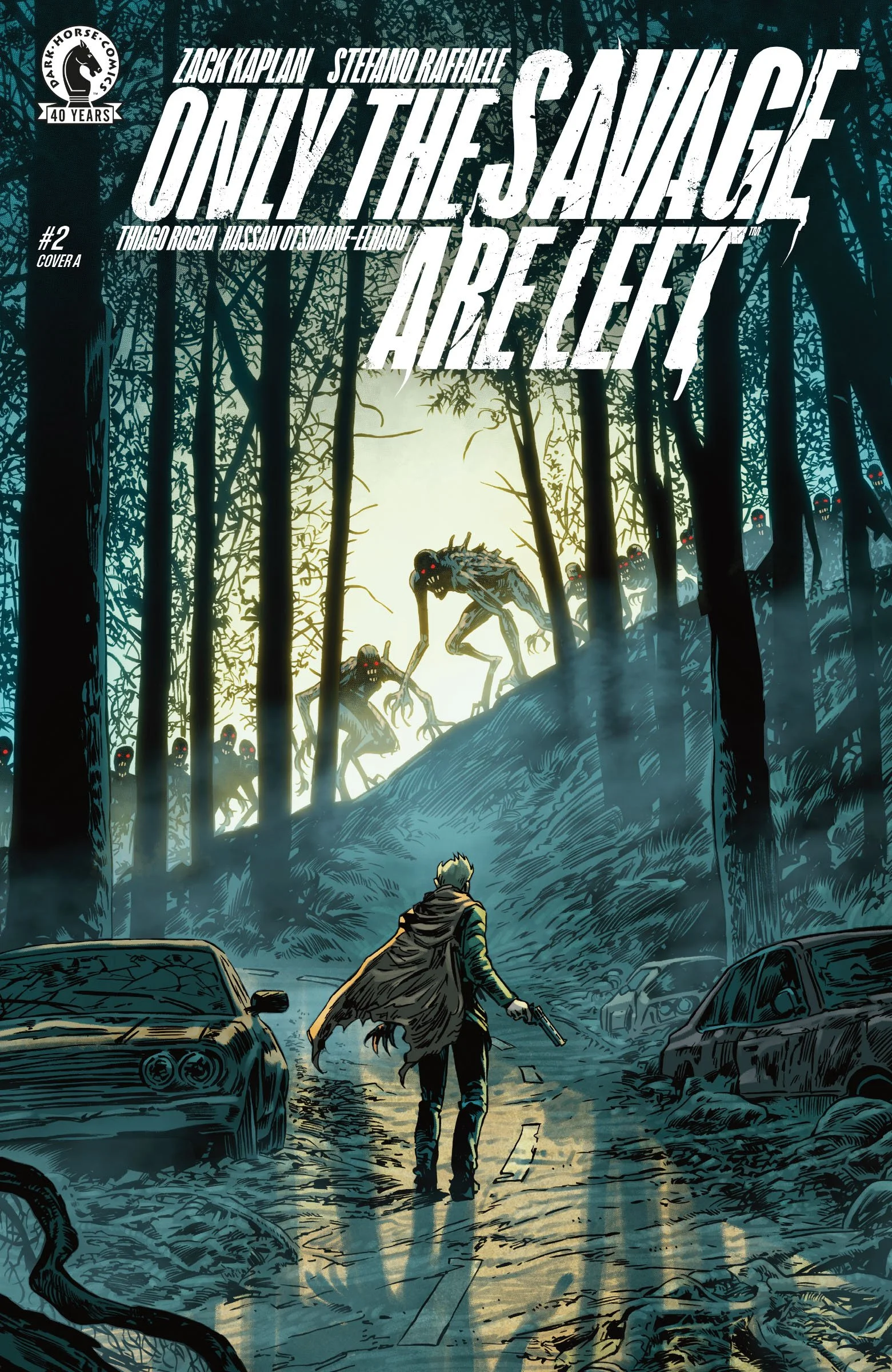
Credit: Dark Horse Comics
*** POSSIBLE SPOILER WARNING ***
STORY OVERVIEW:
Ryder is taking in this world that has been hidden from him since he’s been protected in the settlement. Everything is a shock to him, but thankfully for his sake Oaklynn’s dad Fionn is with him for this journey. However, Fionn is not really fond of sharing the journey with Ryder who he thinks is a coward. Ryder has compassion for people and wants to help, but Fionn knows this world and knows the monsters that inhabit it. The learning experience needs to be learned quickly by Ryder if they hope to survive. The two end up finding Oaklynn, but she is being held captive by some very bad people and will need to be rescued if she stands a chance of survival. Can Ryder use his love for Oaklynn to conquer his fears? Or will this nightmare of a world be too much for him to overcome?
WRITING:
This issue jacks up the intensity from the first issue in a big way, and Zack Kaplan wastes very little time pushing Ryder out of the limited safety he has known and into the brutal reality that has been waiting beyond the settlement. What makes the writing work so well is how closely the reader experiences this world through Ryder’s perspective. Because Ryder has been sheltered for so long, every new piece of cruelty, every act of desperation, and every monstrous reveal lands with the force of discovery. The danger does not feel like background noise; it feels immediate, personal, and overwhelming because Ryder is trying to process it at the same time the reader is.
Kaplan also uses Fionn extremely well as a contrast to Ryder. Fionn understands the rules of this world because he has already been shaped by them, and his harshness gives the issue a sharp edge. He is not simply there to explain things to Ryder; he is there to challenge the way Ryder thinks about survival, mercy, and fear. Ryder still has compassion and the instinct to help people, but Fionn knows that compassion can become a weakness when everyone around them may be dangerous. That tension between Ryder’s humanity and Fionn’s hardened worldview gives the story more emotional weight than a simple rescue mission would have had.
The worldbuilding is another major strength of the issue. Kaplan makes it clear that this post-apocalyptic nightmare is not only frightening because of the infected or the violence, but because society itself has rotted away. People have lost trust, morality has become conditional, and survival often seems to demand becoming worse than the monsters outside. The infected are terrifying because they show what the illness can do to the body, but the uninfected are just as disturbing because they show what fear and desperation can do to the soul. That combination makes the setting feel especially dangerous, since Ryder can never be sure whether the next threat will come from a creature, a stranger, or his own hesitation.
By tying all of that external horror to Ryder’s internal struggle, Kaplan gives the issue a strong emotional hook. Ryder’s love for Oaklynn keeps pushing him forward, but that love also forces him to confront what he is willing to become in order to save her. The writing builds a storm around him from every direction: the cruelty of the world, Fionn’s brutal lessons, the threat of the infected, and Ryder’s fear that he may not be strong enough for any of it. It creates a tense, character-driven issue that expands the scope of the series while making the stakes feel even more personal.
ARTWORK:
The artwork is fantastic and plays a huge role in making this broken world feel dangerous, filthy, and completely unpredictable. Stefano Raffaele brings a rough, grounded quality to the pages that fits the tone of the story perfectly. His environments feel worn down, as if every structure, road, and open space has been beaten down by years of violence, sickness, and desperation. That sense of decay helps sell the idea that Ryder has stepped into a world that has not simply fallen apart, but one that has been slowly rotting from the inside out.
Raffaele’s character work is just as strong. Ryder’s fear, hesitation, and confusion come through clearly, which is important because so much of the issue depends on the reader seeing this nightmare through his eyes. Fionn, on the other hand, is drawn with a harder presence that makes him feel like someone who has already accepted the cruelty of this world. Even before the dialogue makes their differences clear, the artwork shows the gap between them. Ryder looks like someone trying to survive the shock of what he is seeing, while Fionn looks like someone who has been surviving it for a long time.
The infected and the more brutal moments are where the horror side of the book really comes alive. Raffaele does not hold back from the graphic nature of the story, but the violence never feels empty. The infected designs are disturbing because they feel painful and unnatural, showing how badly this sickness has twisted the human body. There is a strong sense of movement and danger in those sequences, and the way the panels present the chaos makes the world feel like it can turn violent at any second. The horror works because it feels physical, ugly, and immediate.
Thiago Rocha’s colors push that atmosphere even further. The yellows, browns, and dusty earth tones give the issue a scorched, sickly apocalyptic look that matches the hopelessness of the setting. The colors make the world feel hot, dirty, and drained of safety, while still allowing the action and character moments to stand out clearly. Rocha’s work adds a grim mood to the pages without overwhelming the line art, and it helps tie the emotional tone of the story to the visual tone of the world.
Together, the art and colors make the issue feel fully realized. The visuals do more than show the violence; they make the reader feel the danger, decay, and desperation surrounding Ryder and Fionn. Every page reinforces the idea that this is a place where survival comes at a cost, and that makes the artwork a perfect match for the story. The creative team does an excellent job making this world look as savage and unforgiving as the title promises.
Check Out MY REVIEW OF ONLY THE SAVAGE ARE LEFT #1
Final Thoughts:
Only The Savage Are Left #2 continues the groundwork that was started in the first issue and reveals even more of this hellscape of a world. The internal struggle within Ryder at times feels more threating than the nightmare external struggle and that gives this story its relatability. It also gives this story a big advantage over other stories in this genre as it brings a human element to the story that anyone can relate to. If this series is not already on your Pull List, you need to rectify that immediately! This is one of the best new series out right now and even after two issues I promise you won’t want to miss what’s next.
FINAL GRADE: 10/10
Let me know your thoughts on Only The Savage Are Left #2 in the comments below. Thanks for reading!