ASSORTED CRISIS EVENTS #9 (image comics)
One of the most fun series on the shelves has returned, as Assorted Crisis Events hiatus has come to an end. Chuckie is a young man who needs money to help his sister, so he gets a new job in this gig economy. However, this app-based job isn’t what it seems to be. But that doesn’t matter because time is money.
Assorted Crisis Events #9 - Written By Deniz Camp – Art By Eric Zawadzki - Colors By Jordie Belaire - Letters By Hassan Otsmane-Elhaou - Published By Image Comics
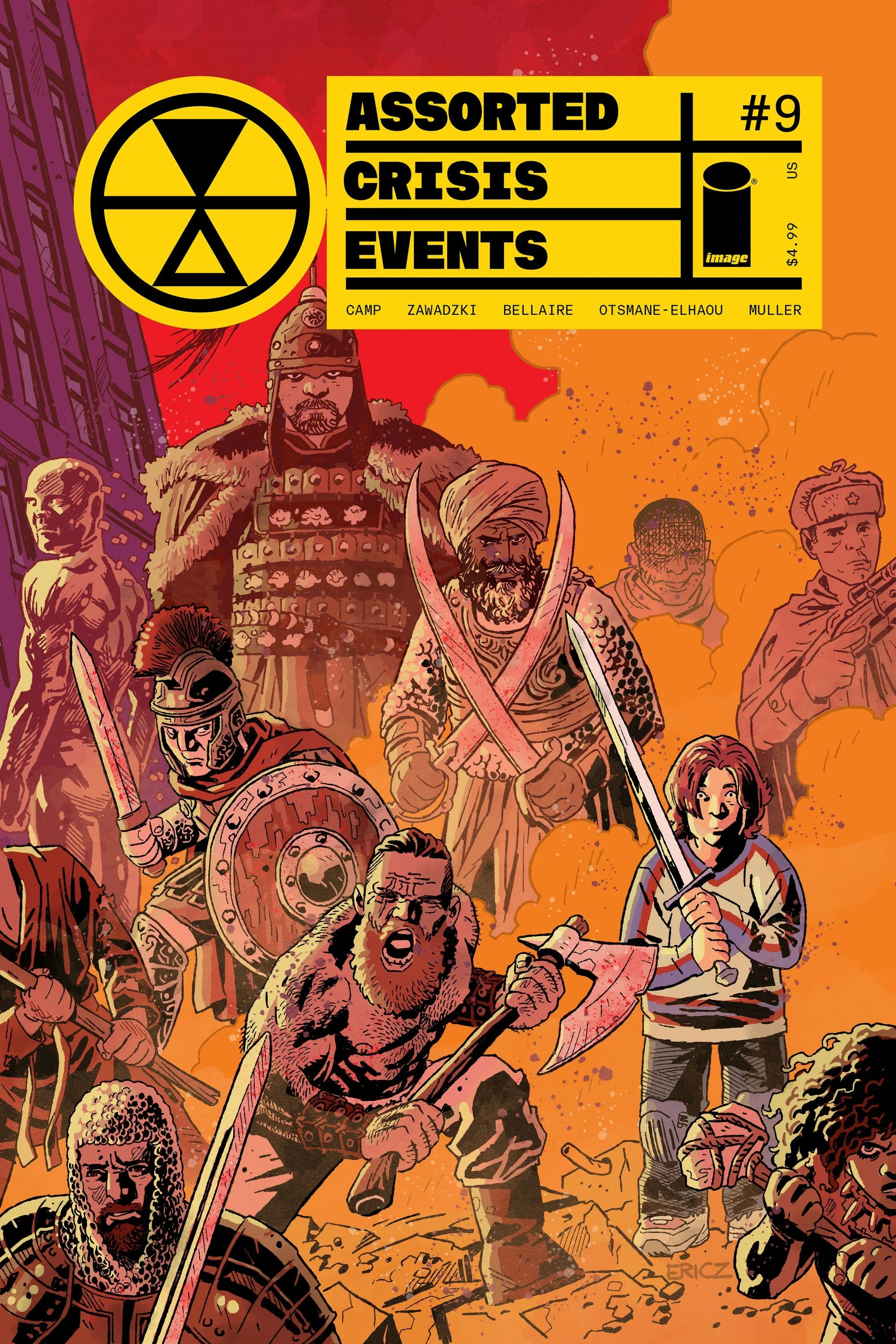
Credit: Image Comics
*** POSSIBLE SPOILER WARNING ***
STORY OVERVIEW:
Chuckie is desperate to make money to help his sister. Because of this he takes a job with this new app Temp. This app gives you a job in time traveling, where you can do different jobs to make money. Some of the jobs put you in the middle of the Time War, where others have you go through time and kidnap historical people so people can take pics, vids, and hang out with them. As Chuckie learns the ropes from Lou, he finds out that the mantra is time is money. However, the small print makes it slightly impossible to make any real money. This makes Chuckie disgruntled and ready to complain even though Lou tells him not to. Can Chuckie suck it up or will he complain and face the consequences of that?
WRITING:
This return issue of Assorted Crisis Events drops readers right back into the series’ offbeat, chaotic energy without spending too much time easing them in. Deniz Camp quickly reestablishes the rules of this strange world while also making the central conflict feel immediately understandable: Chuckie needs money, the system promises opportunity, and that promise very quickly starts to look like another trap. The use of an app-based time-travel gig job is a clever way to exaggerate the frustrations of the modern gig economy, where workers are constantly told that flexibility equals freedom even when the fine print is stacked against them. Camp pushes that idea into absurd science-fiction territory, but the emotional core remains very grounded.
What makes the issue work is that the social commentary is obvious without feeling flat or lifeless. The story is clearly taking aim at exploitative work structures, the illusion of quick money, and the way desperate people can be pressured into accepting worse and worse conditions. However, Camp keeps the pace moving through bizarre scenarios, sharp humor, and sudden bursts of violence. That balance helps the issue avoid becoming didactic. Instead of simply lecturing the reader, the story lets Chuckie’s growing frustration build naturally as he learns how little power he actually has inside this supposedly exciting opportunity.
Camp also understands how to keep the world unpredictable. The time-travel setup allows the issue to jump from one ridiculous situation to another while still staying focused on Chuckie’s experience. The fight sequences and violent moments give the issue momentum, but they never overpower the larger point being made. Instead, they add to the sense that this world is dangerous, funny, and deeply unfair all at once. Much like the series as a whole, this issue feels refreshing because it takes a familiar real-world anxiety and filters it through a wildly original concept. It is strange, energetic, and thoughtful in a way that makes Assorted Crisis Events continue to stand out.
ARTWORK:
The art in this issue is creative, fun, and wacky all rolled into one, and Eric Zawadzki proves to be a perfect match for the strange rhythm of Camp’s storytelling. His pages have a modern, slightly abstract energy that fits the time-bending chaos of the issue without ever becoming confusing or overwhelming. Even when the story jumps into bizarre situations, the visual storytelling remains clear, guiding the reader through each scene while still leaving plenty of room for odd details, strange expressions, and offbeat design choices to stand out. The artwork captures the absurdity of the premise, but it also keeps Chuckie’s frustration and desperation grounded, which helps the issue feel funny and unsettling at the same time.
One of the strongest parts of Zawadzki’s work here is the way the backgrounds support the action without stealing attention from it. The environments often feel blended into the larger design of the page, giving the world a slick, almost artificial quality that fits the idea of a time-travel gig app selling dangerous work as something casual and convenient. At the same time, there is always something visually interesting tucked into the panels, whether it is a strange setting, a sharp piece of visual humor, or a small detail that rewards a second look. That balance lets the reader focus on the characters and the movement of the story on the first read, while still giving the pages enough personality to pull you back in afterward.
The character designs are also catchy and original. Chuckie looks like someone who does not fully belong in the situations he is being thrown into, and that works perfectly for the character. His design helps sell the idea that he is an ordinary person being swallowed up by a system much bigger, stranger, and more ruthless than he expected. Lou and the other characters have a little more flexibility in their designs, often playing with different styles and looks that reflect the issue’s movement through time and its weird mix of history, technology, and exploitation. Zawadzki also gets a lot of mileage out of the Temp app itself. The fake ads, pop-ups, and app-based details make the service feel cheap, invasive, and sleazy in a way that instantly feels familiar. Those additions are funny on the surface, but they also deepen the commentary by making the app feel like another character in the story.
Jordie Bellaire ties everything together with a color palette that gives the issue even more life. The brighter colors immediately draw the eye to the important action, characters, and app elements, while the more subdued background tones keep the pages from becoming too busy. That contrast is important because the issue has a lot going on visually, and Bellaire’s colors help organize the chaos without dulling its personality. The final result is artwork that feels loud, stylish, and energetic, but also controlled enough to serve the story. Zawadzki and Bellaire make the world of Assorted Crisis Events feel strange and unstable in all the right ways, turning the visuals into one of the series biggest strengths.
check out my review of assorted crisis events #8
Final Thoughts:
Assorted Crisis Events #9 is a great return issue for this amazing and fun anthology series. The odd story and fun artwork help the reader get lost in the more serious message driven narrative. This is why this series is so beloved and revered. The fact that you can put an important message/lesson inside of a fun world helps drive home said message well not being too preachy. If you haven’t given Assorted Crisis Events a chance yet, this is the perfect opportunity to pick up a copy at your LCS this week and find out what you’ve been missing.
FINAL GRADE: 9/10
Let me know your thoughts on Assorted Crisis Events #9 in the comments below. Thanks for reading!